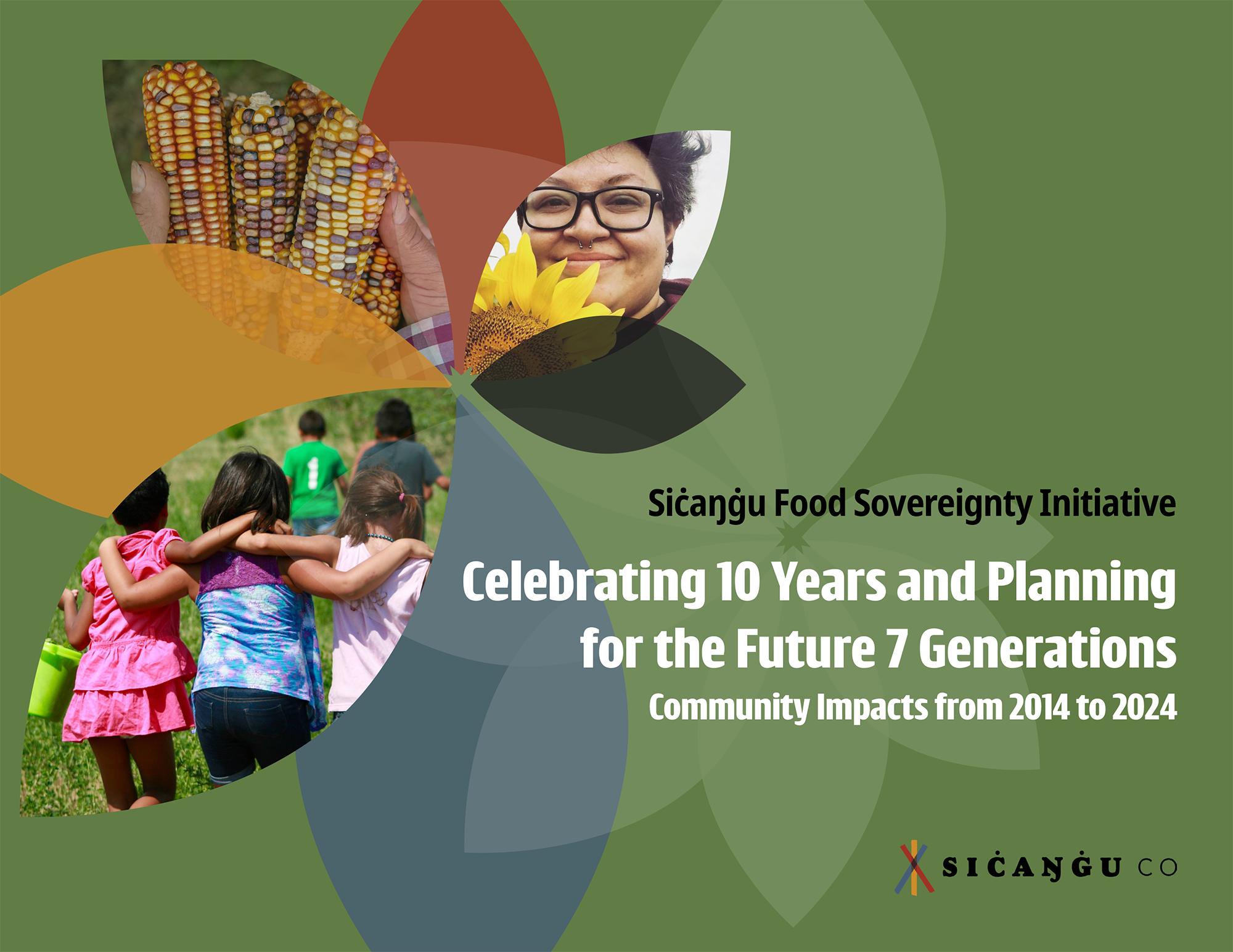
Siċaŋġu Food Sovereignty Initiative: Celebrating 10 years and planning for 7 generations
Siċaŋġu Co
As the economic engine of the Siċaŋġu Lak̇ota Nation in South Dakota, Siċaŋġu Co’s purpose is to improve the financial and social well-being of its tribal relatives. It is working towards Wicozani, or “the good way of life” for the Siċaŋġu Oyate—holistic health, economic self-sufficiency, cultural revitalization, sustainable housing, food sovereignty, climate resilience, and shared, lasting prosperity.
-
This project assessed the community and economic impact of the Sicangu Food Sovereignty Initiative's programs after its first 10 years to help the Initiative communicate its impact to funders and community members, and provided recommendations for strategic funding sources to pursue. We interviewed staff members and designed a six-pronged community impact survey focused on community members, market vendors, producers, program participants, parents, and parents of students at Sicangu Co's Lakota immersion school. We also assessed the Initiative's historical data and reports and created a theory of change and logic model that were refined through a guided workshop with the Initiative's staff.
-
Organize, compile, and analyze the Initiative's existing data records from different market years and locations into a single spreadsheet database.
Analyze and track growth over time.
Apply an economic multiplier effect of their markets.
Design a community survey for six different segments of the Initiative's community to assess the long-term impact.
Create marketing materials to support the Initiative in conducting survey outreach.
Conduct semi-structured interviews with key Sicangu Co staff to design a theory of change and logic model to explain the Initiative's impact and their intended future directions.
-
We created a theory of change and logic model based on the Initiative's activities, plans, and Lakota cosmology, as well as an impact report and presentation for the Initiative to use to communicate their impact to funders and their community. We also provided cleaned and anonymized survey data, and organized the Initiative's existing market and harvest data to provide a framework for comprehensive data tracking to more easily assess future impact.
-
Apr 2024–Feb 2025
-
Mairi Creedon — Client communication, tool design, data collection, data analysis, theory of change and logic model, report writing, and presentation
Jodi Wolfe — Creative direction, graphic and layout design, and presentation design
Julianna Smith — Theory of change and logic model design