Boost your brand to support emotional connection and audience engagement
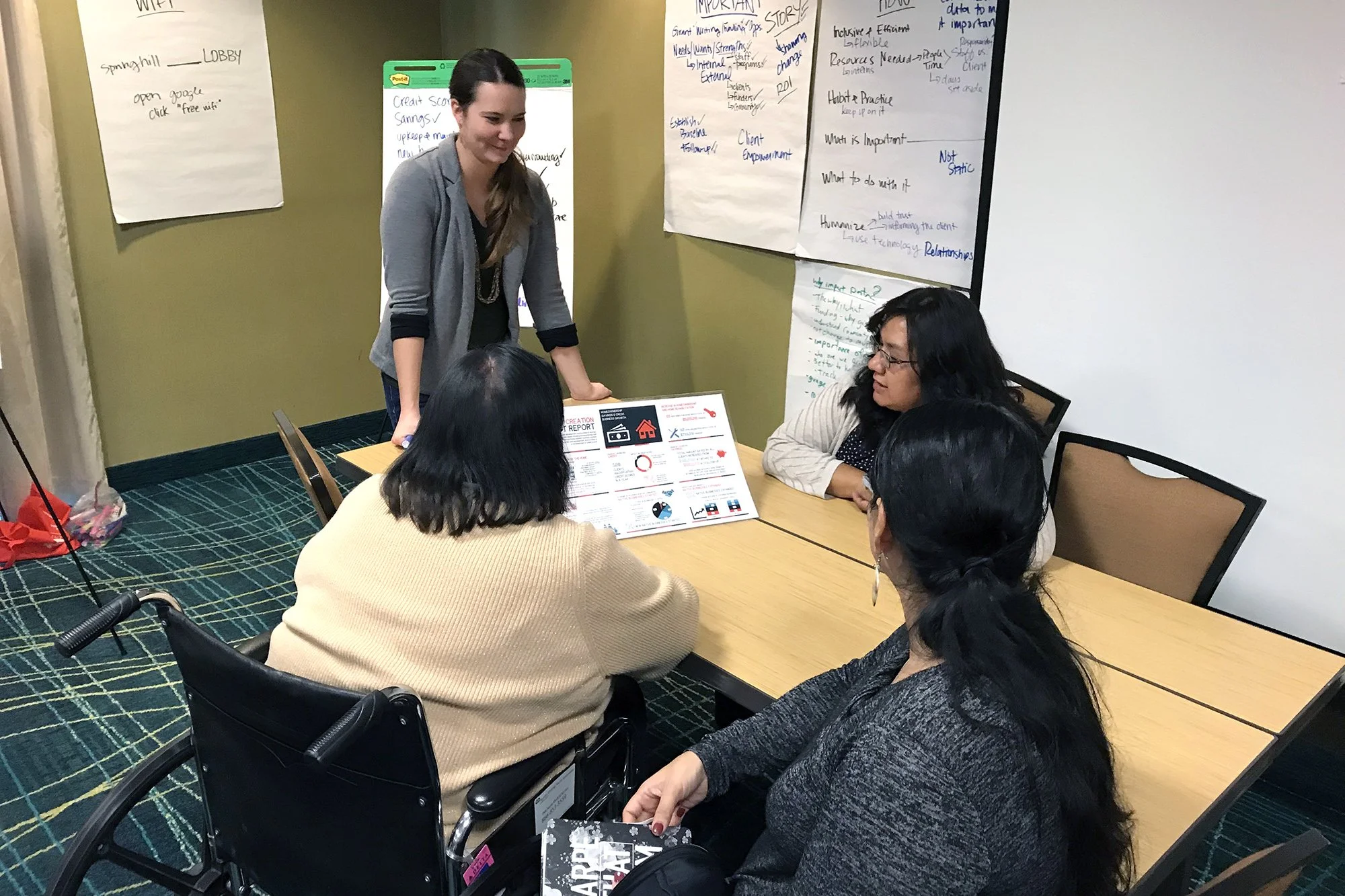
Andrea Mader shares visual designs with clients.
If you work for a development fund, a housing organization, or do research on community needs, you probably aren't thinking much about branding. Organizations that serve Native and reservation communities deal daily with unique, compounding problems like unstable funding, missing infrastructure, and legal and historical barriers that don't have easy fixes. But paying some attention to how your organization presents itself can help with at least one of those problems: earning trust and building lasting relationships with the people you're trying to serve.
Your audience and the people you serve have options, and they can choose to ignore your outreach, your products and services, and your business. An effective brand cuts through the noise and builds a connection with customers whose attention is in constant demand, both in person and online. Whether you’re asking your audience to share personal information, attend a meeting, take a survey, accept help, or use a service, what you’re really asking for is their trust. A consistent, welcoming brand communicates your organization’s legitimacy, dedication, and competency, and helps you earn that trust.
This is true even in situations where branding is minimal and visual design seems unimportant. For example, let’s say that your organization is promoting a housing survey for an upcoming needs assessment. Participation in the survey is essential, because you need to collect the most meaningful amount of data to get an accurate representation of the thoughts, needs, and feelings about housing in the community.
When you ask someone to give their time and information via email, publicly posted flyer, or social media post and the invitation itself is visually jarring, uses too many colors, fonts, logos, icons, pictures, or confusing words, they may wonder: Who’s really asking? Can I trust these folks? What will they do with my information?Instead, your brand can establish your group as a credible voice by:
Consistently using visual elements across all outreach materials, including the survey itself, to reinforce brand recognition
Using the same (thoughtful and minimal!) colors, fonts, and images to make it clear that your organization is the one behind the work
Knowing you’re asking something of your audience and making your words warm and considerate, but brief, setting a grateful and empathetic tone
These efforts will reflect your authentic desire to help the most people and clearly says: This is us, we are paying attention, and we appreciate your input.
Branding can also help set the tone and guide how your audience receives the type of information you share. In 2024, I designed a report that presents in-depth Sweet Grass research about a sensitive and emotional subject — elder abuse and mistreatment. When creating the report, I used a subdued but powerful color palette dominated by deep crimson, navy, and gold. The cover graphic featured a single black-and-white abstract image of an elder’s hand being held. I limited graphic elements to only a large rose bloom (drawn from the roses that encircle the tribal logo) and feathers, which are sacred tribal symbols of honor, courage, and spiritual connection. I chose a narrow, undecorated font for large amounts of the narrative and research copy, complemented by a handwriting font I selected to add a human touch to the report title and attributions for quotes from people involved in the study. I limited photography to images taken at elder advisory council meetings, honoring the contributions made by council members to deliver this important research. The overall effect was aesthetically pleasing but conveyed the respect and gratitude owed the elders of the tribe.
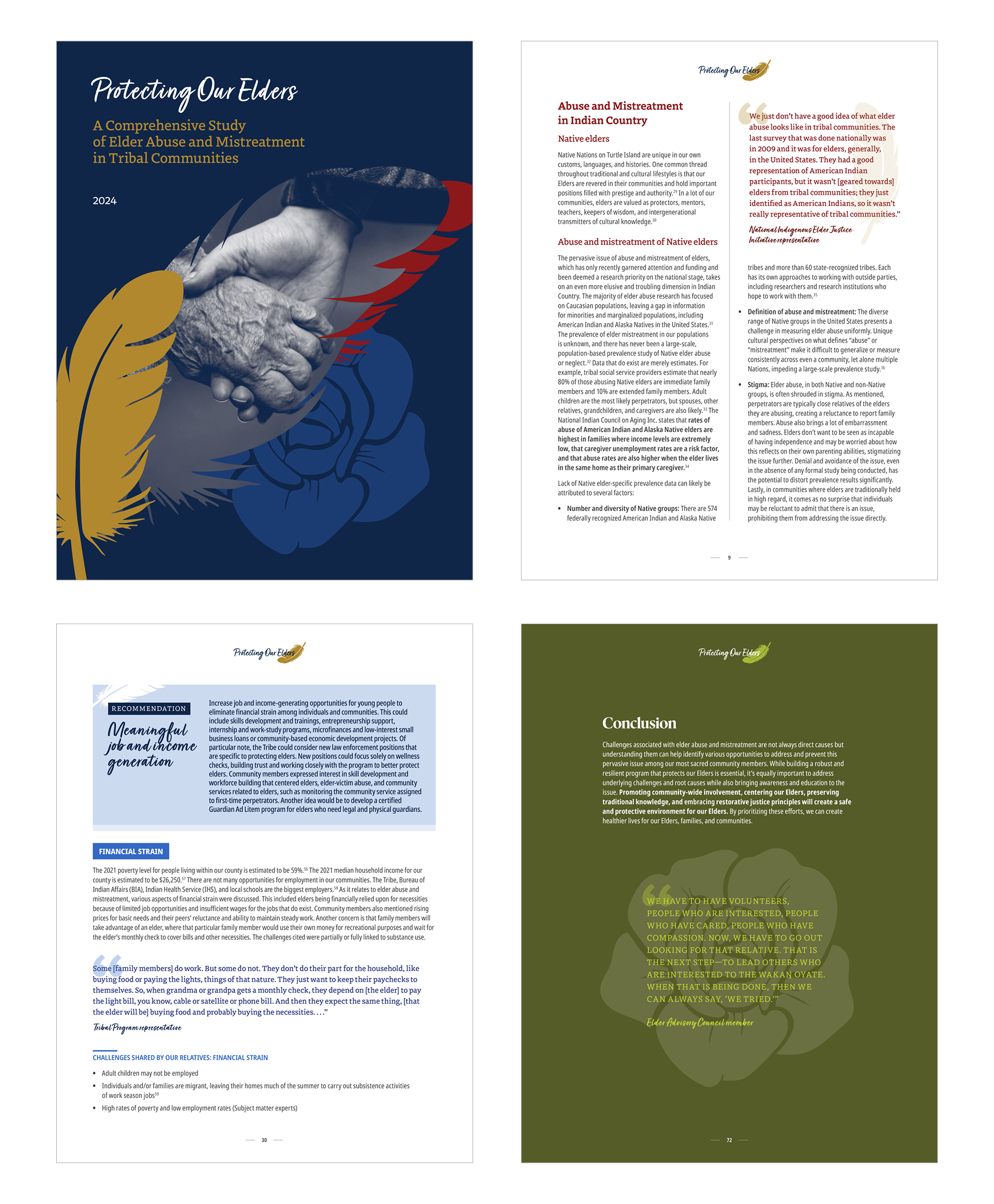
If I had I chosen bright, cheerful colors and a multitude of playful fonts and images, the tone of the content of that particular report would not have come across to its audience. A sincere approach to the branding helped lend gravitas to the serious subject matter.
Branding matters. Yes, that means yours
Your brand represents the sum impact of the ways you engage with people and whether their experience leads them to further trust and interact with you. And this goes beyond the people your business serves. Strong, clear branding also helps you:
Recruit and keep volunteers and staff who feel proud to represent you.
Build credibility with funders who want to support organizations that are intentional and mission-driven.
Improve your outreach by being a reliable and familiar presence for customers.
Branding relays the values on which your business stands, and the mission you put forth in service of your desired customer base. It creates the vibe someone gets when they scroll through your social media posts or open an email from you. It’s when a community member feels like your organization is truly for them.
Your brand continues to take shape over time, for better or worse, through every interaction with the community your organization serves.
For nonprofits and organizations doing challenging, important work with limited funds for under-resourced populations, branding is a tool for impact. When your brand is clear and consistent, people begin to recognize you. Then the real work of trust building begins. People who trust you are more inclined to show up, participate, share information, and tell their friends and neighbors.
Your brand is already out there. Take a deeper and intentional look at it, and you’ll know if it’s working for your organization as hard as it should be. If not, Sweet Grass offers creative services from branding to digital communications. Get in touch anytime for a conversation about your team’s needs. We’d love to help!
Design resources for nonprofits:
Share