The Sicangu Food Sovereignty Initiative revitalizes a connection to Lakota culture through food
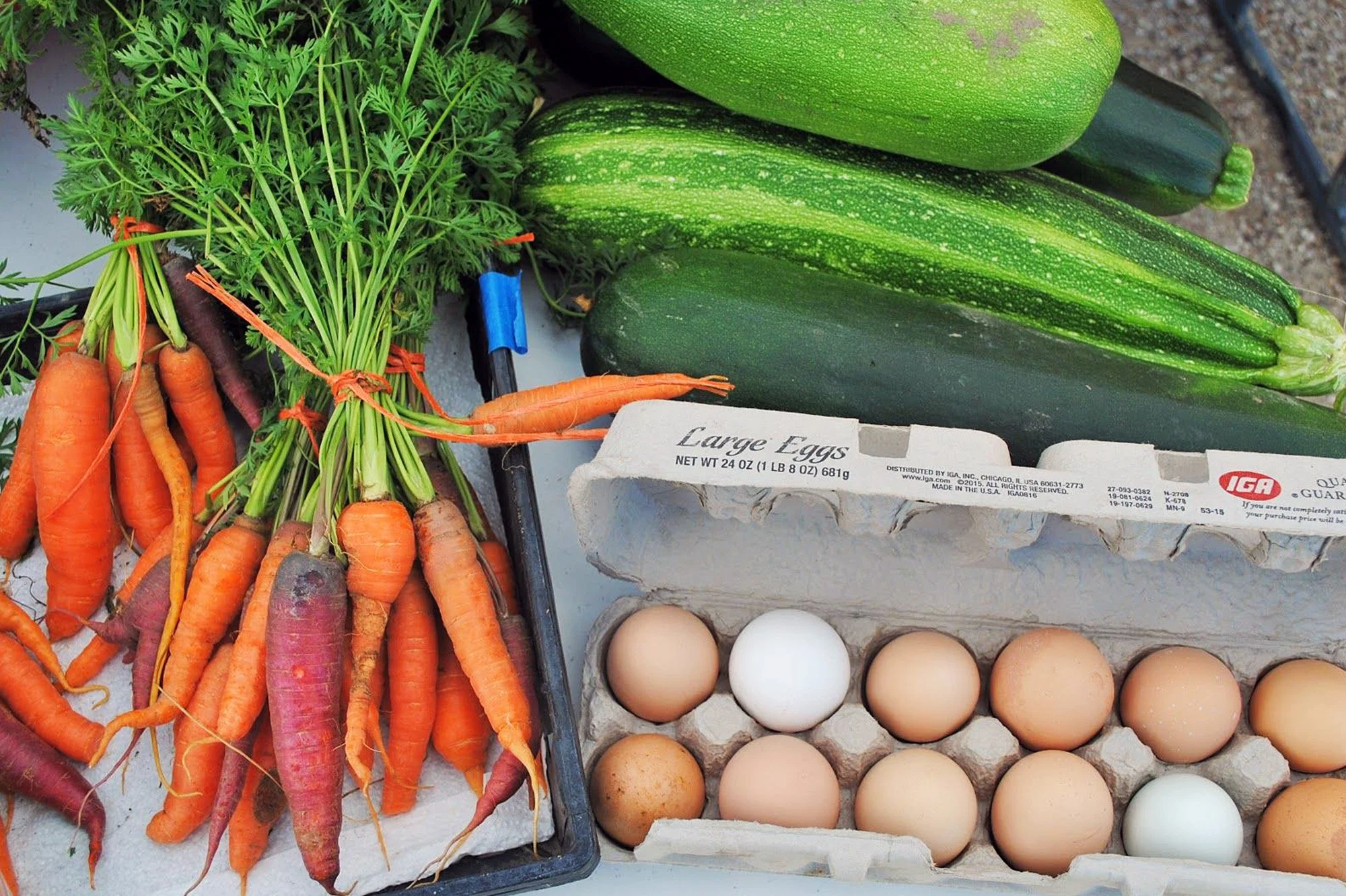
Local produce from Keya Wakpala Farmers’ Market in Mission, South Dakota.
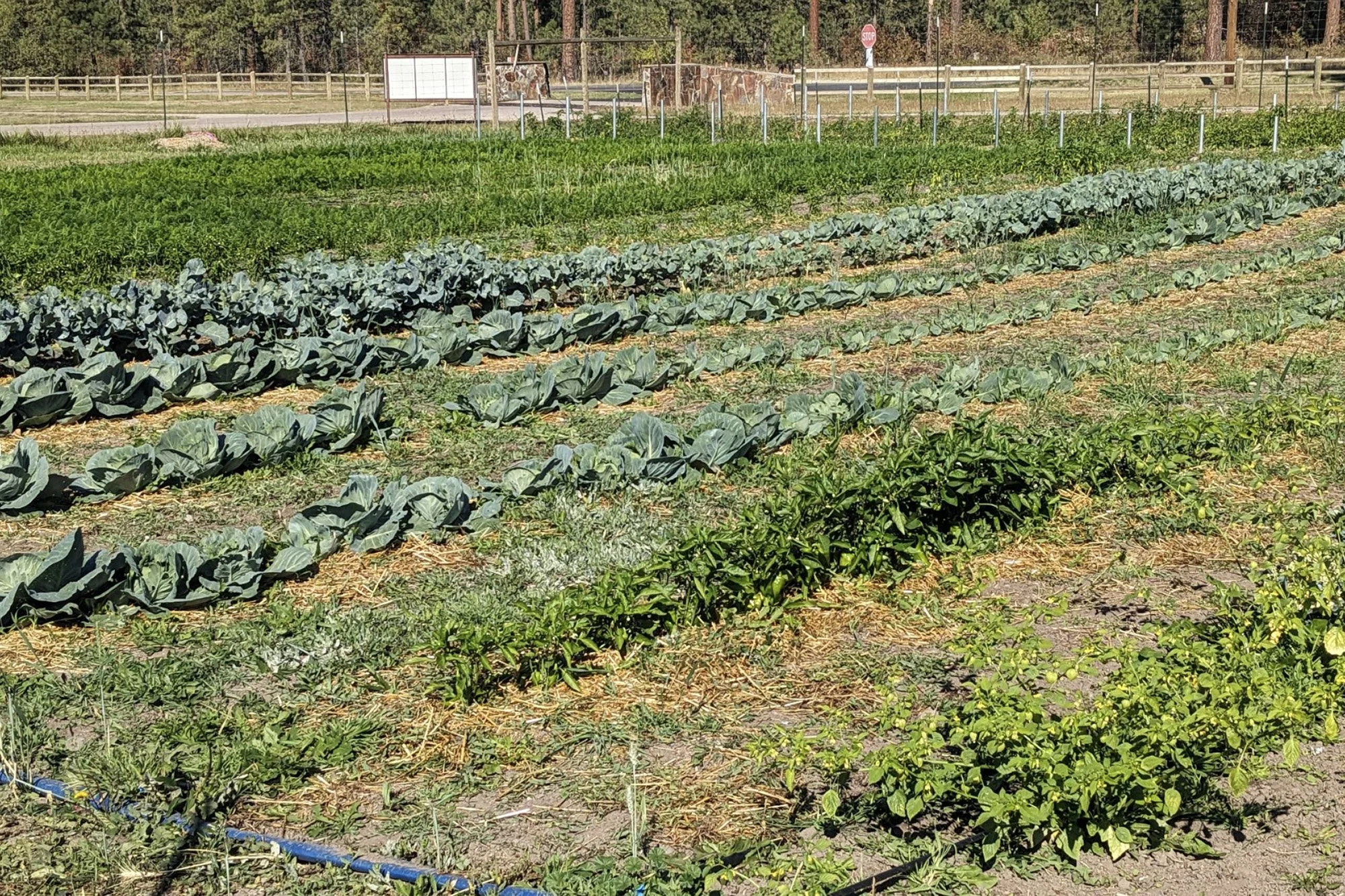
One mile west of Mission, South Dakota, the Keya Wakpala Community Garden’s geodesic dome greenhouse peeks over the rolling hills of the prairie, visible from the highway when you’re driving in or out of town. In 2014, the Sicangu Food Sovereignty Initiative (SFSI) broke ground on the garden, and it became the foundation from which their other programs grew. The SFSI is working to build, transform, and re-Indigenize foodways for the Sicangu Lakota Oyaté (Burnt Thigh Nation). The garden and geodesic dome are visible reminders of the work the organization and their community has put in for the last 12 years to revitalize Lakota language, food, and culture, and build modern Lakota foodways and food sovereignty for the Oyaté (Nation), as well as in each ospaye (community).
The SFSI is part of the nonprofit arm of Sicangu Co., an ecosystem of initiatives and entities that is working toward wicozani, or holistic spiritual, emotional, and physical well-being for the Sicangu people. The organization connects tribal citizens to their language, food, and culture through prayer, farming, foraging, ranching, cooking education, hands-on experiences, and opportunities for connection.
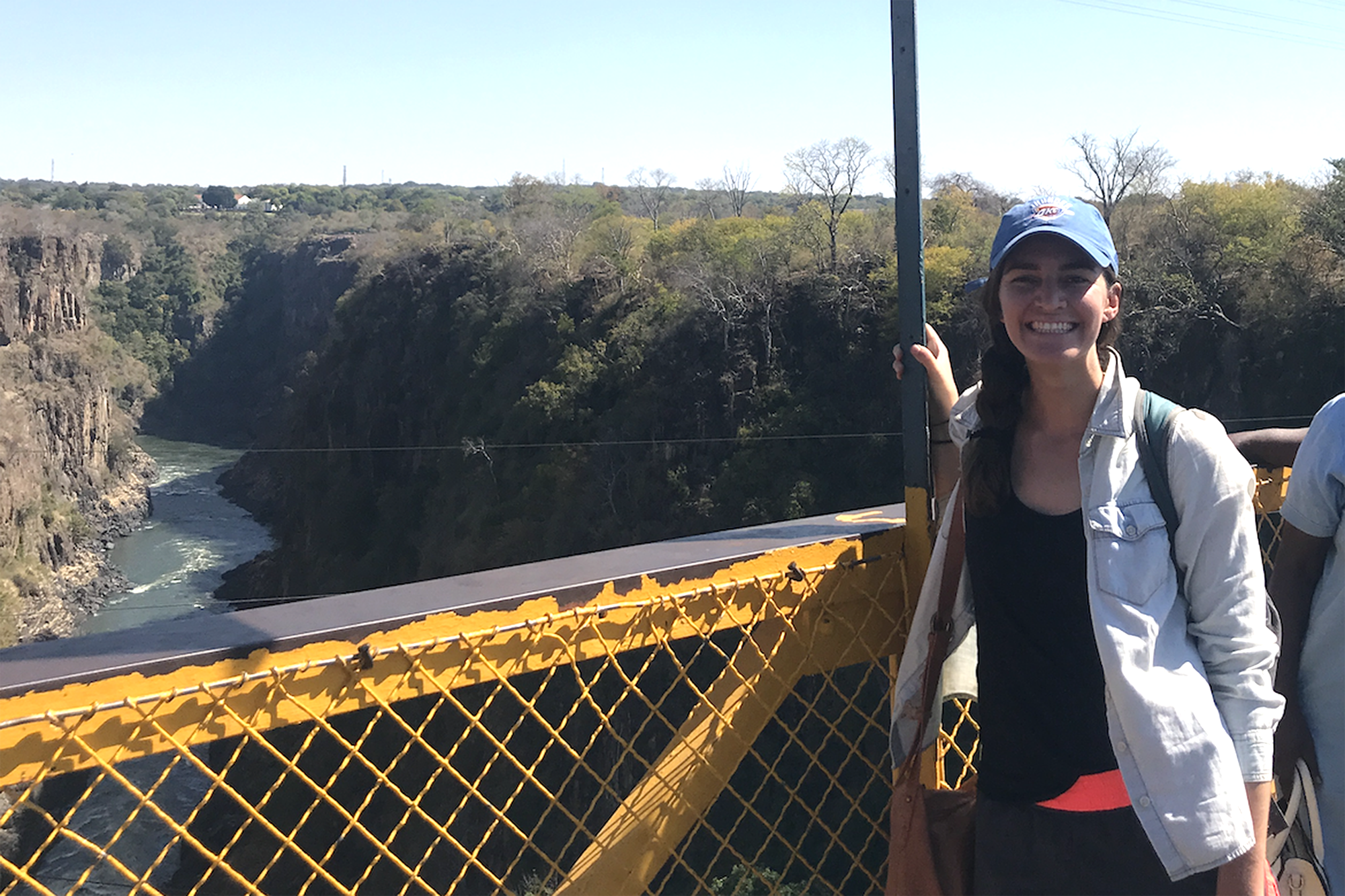
From 2019 to 2021, before I joined Sweet Grass, I worked at the Sicangu Food Sovereignty Initiative as a Native Food Sovereignty Fellow through the AmeriCorps VISTA program. I’d heard about food sovereignty while studying sustainability and economic development, and I wanted to learn more about it. While I’m not Indigenous to the Americas, this is the land where I live, and my ancestors also suffered oppression through the destruction of their food systems. I also grew up in a rural area where land is largely inaccessible (which, I would come to find out, can be the case on the Rosebud), and I wanted to learn how to work with rural communities to address the problems they face.
At the SFSI, I was involved in many areas of the organization, including co-launching a free community seed library, producing a podcast, designing a community garden space, and creating curriculum for a youth internship and adult volunteer program. I also helped lead research efforts. In 2019, I worked with the SFSI’s youth interns and other staff to write The State of Food Sovereignty report, and hired and worked with consulting companies (including Sweet Grass) to conduct mobile grocery store and food hub feasibility studies in 2020 and 2021.
In 2024, as a senior researcher at Sweet Grass, I had the opportunity to lead an evaluation of the SFSI’s impacts on the Sicangu Oyaté for their 10-year anniversary. For this project, we assessed the ways community members connect to Lakota culture and language through food, as well as the economic impacts of the Initiative. We also provided recommendations for future funding and market strategies. That September, I traveled back to the Rosebud for the first annual Tour de Rez, a day of free tours of local gardens and farms. Some of those farms and gardens are run by individuals who learned to grow food at the Keya Wakpala Garden. It was inspiring to see the ways the organization had changed and grown since just a few years earlier.
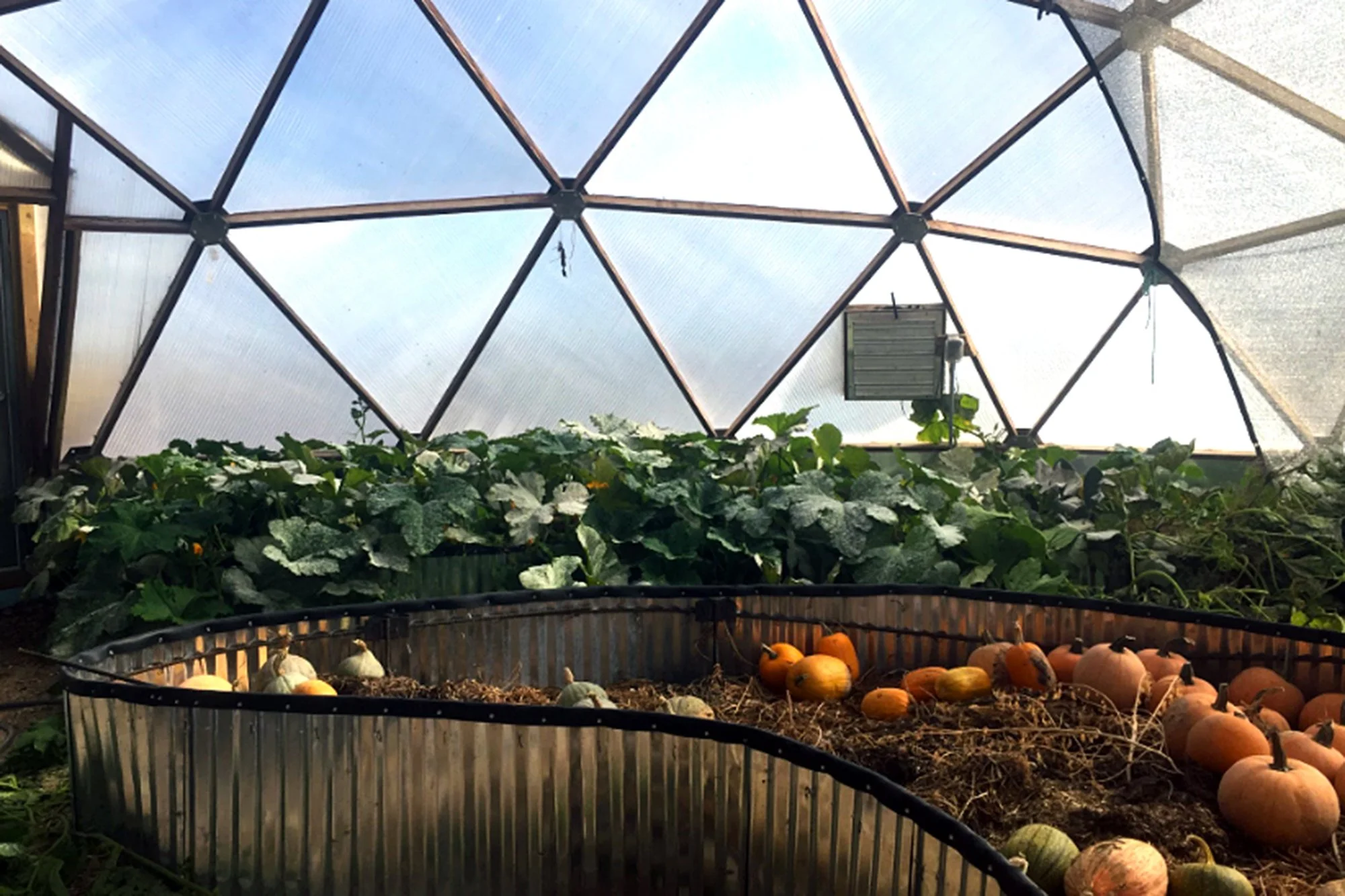
Inside the greenhouse at the Keya Wakpala Community Garden in Mission, South Dakota, in October 2019.
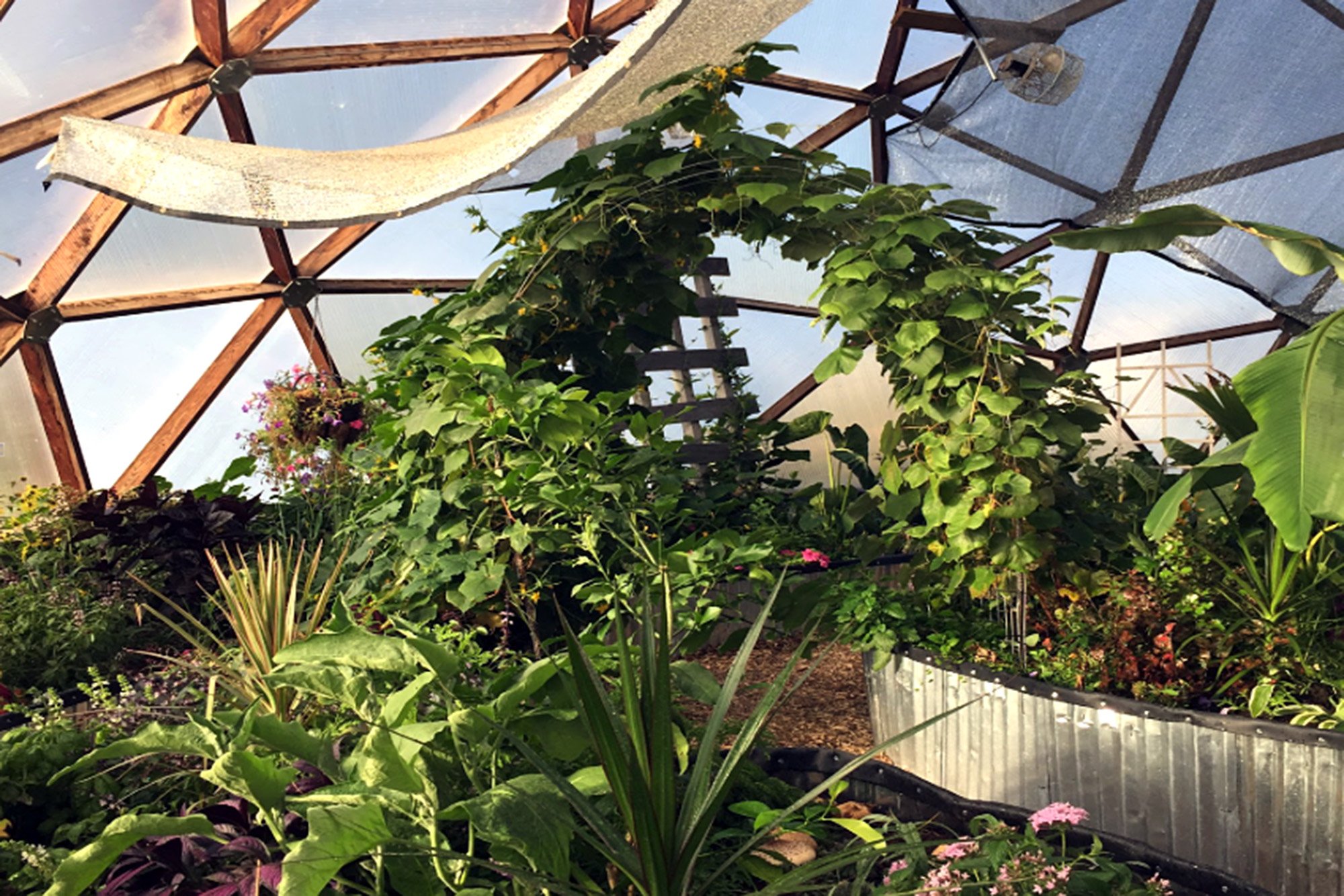
Lush vegetation inside the greenhouse at the Keya Wakpala Community Garden.
Historical context: Colonization on the Northern Great Plains
Before colonization reached the Great Plains seven generations ago, tens of millions of buffalo roamed the prairie. The Sicangu Lakota Oyaté (Burnt Thigh Nation) were one of seven Lakota bands who lived on these lands, sustaining themselves through a buffalo-based economy. Before European colonization, the Sicangu people relied on buffalo for food, shelter, tools, clothing, and sacred ceremonies. But as the settlers moved west, the Sicangu lost their territory through violence and broken treaties. To quell Indigenous resistance against the theft of their lands, the US government killed the wild buffalo herds to destroy the Lakota economy, and confined Indigenous peoples to much smaller reservations.
After the buffalo disappeared, the Sicangu were forced onto the Great Sioux Reservation, a large, shared land base encompassing West River, the part of South Dakota that lies west of the Missouri River. It stretched north into North Dakota, south into Nebraska and Colorado, and west into Montana and Wyoming. Once on the reservation, the Sicangu were made to stay reliant on colonized foods provided by the government and use its “commodity” food system. But when gold was discovered in the Black Hills, the US government reneged on its treaty agreements, and the Sicangu were eventually restricted to the Rosebud Reservation in south-central South Dakota. The SFSI is addressing the intergenerational trauma that’s been present in the community since colonization began.
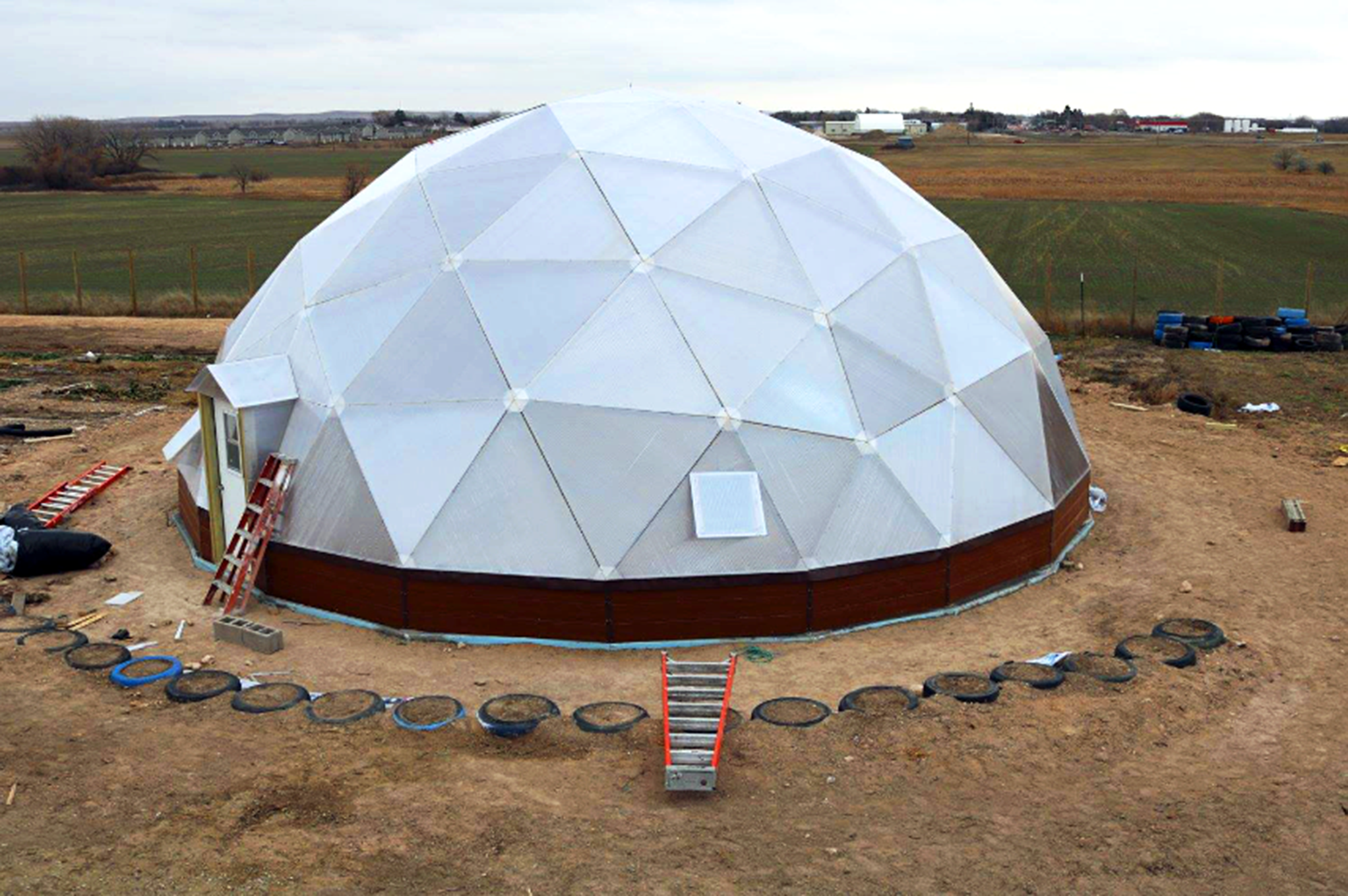
The geodesic dome greenhouse during construction.
Historical influences on present-day life
After the Sicangu’s traditional food system was decimated, a long period of cultural oppression attempted to ruin the Lakota language, religion, and family structure. Many Sicangu elders on the Rosebud Reservation still remember their time at boarding schools, when the US government sought to eradicate Indigenous culture by separating children from their families to prevent the transfer of intergenerational knowledge and language learning.
The trauma Sicangu youth and families suffered at the hands of the US government continues to impact community members to this day. The systemic extraction of resources and imposed political power have made it extraordinarily difficult for Indigenous communities to recover, and disparities still persist. In 2024, Todd County (the only county wholly encompassed by the Rosebud Reservation) had a poverty rate of over 48%, with a per capita income of $15,388 and a median household income of $42,075.
Despite a high Indigenous population, the food system on Sicangu Lakota lands is largely controlled by settlers. Only 65 farmers in Todd County are American Indian or Alaska Native (23%), compared to 196 white producers (69%). Meanwhile, nearly 84% of the county is American Indian or Alaska Native.
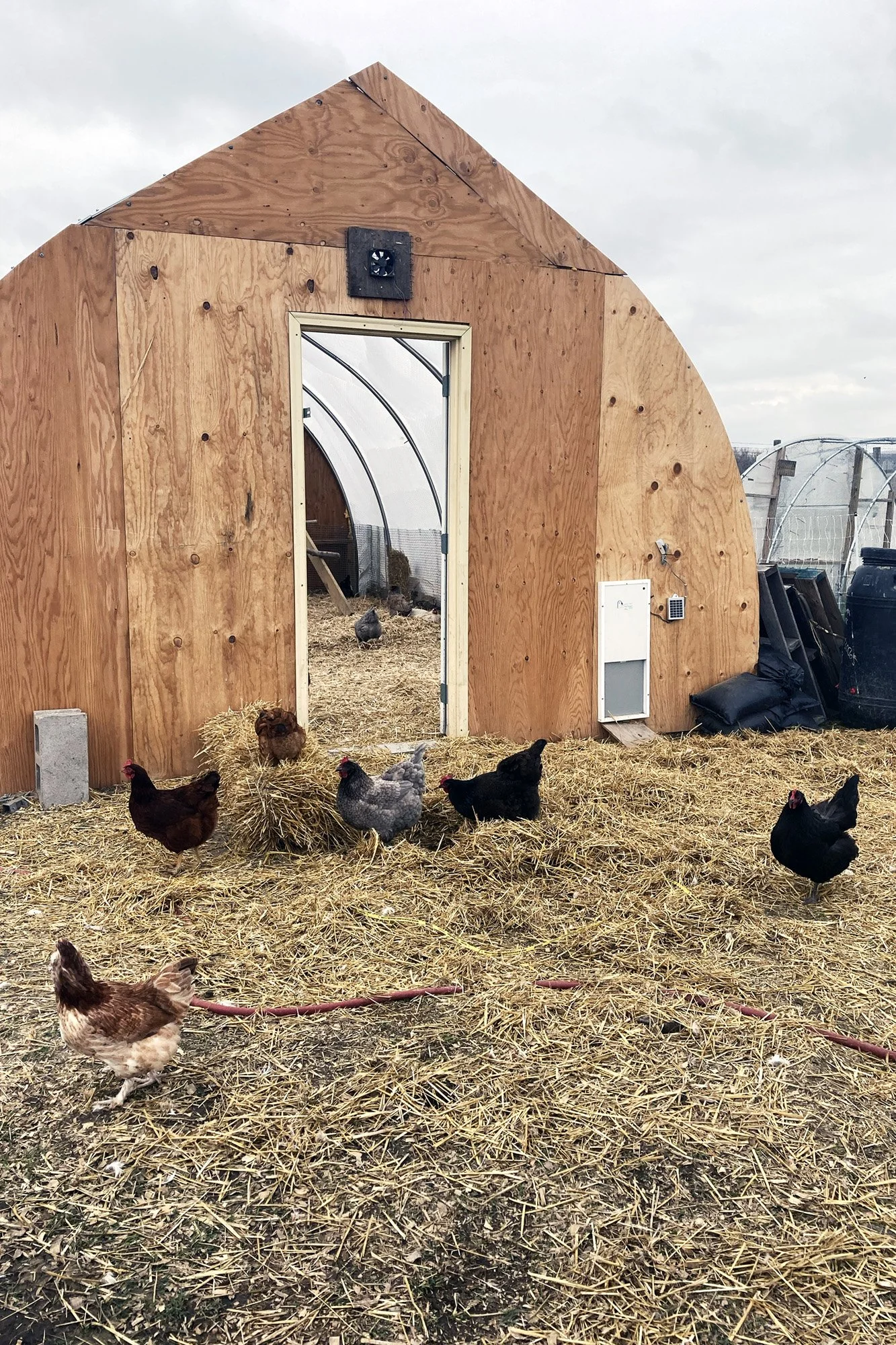
Hoop house at the Keya Wakpala Garden.
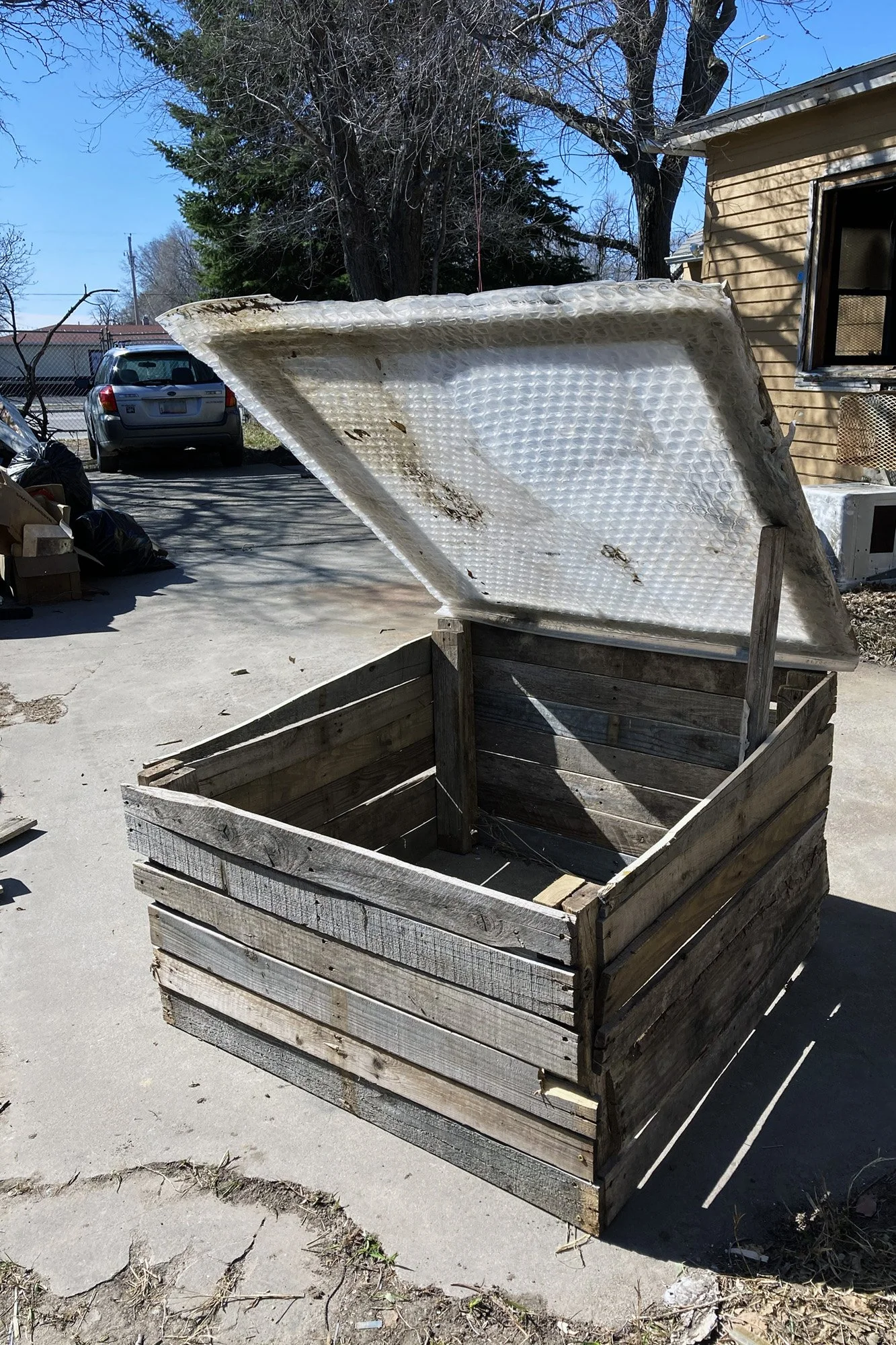
Cold frame made of pallet wood for the community garden space.
Measuring 10 years of community impact
Since its founding 12 years ago, the SFSI has become a pillar in the local food economy of the Rosebud Nation. Now in their second decade, their programs only continue to grow. The Keya Wakpala Garden, a place for cultural revitalization and a training ground for small-scale producers, will be expanding to nearly nine acres. In 2025 alone, the Initiative provided free food boxes to over 2,000 families and was instrumental in making sure families were fed during the US government shutdown.
The Sicangu Harvest Market, which began as a few booths selling vegetables out of a local grocery store parking lot in the mid-2010s, has also seen significant growth. Last year, over 40 vendors sold at the market throughout the season, and the market outgrew its space for the third time. In 2025, the Initiative operated their third annual Sicangu Food Summit and second annual Tour de Rez. They ran a Local Foods Capacity Program to help food producers grow and scale their businesses and offered up to $8,000 in grant funding for equipment and supplies. Producers also had the opportunity to sell their goods to the Initiative on a wholesale basis, helping supply the SFSI’s community food distribution programs. Throughout their history, the SFSI has provided paid summer internship opportunities for local youth and adults. Since 2019, they’ve also operated the Waicahya Icagapi Kte (WIK, or “They Will Grow Into Producers”) Internship Program, an eight-month paid adult apprenticeship to learn how to produce food.
While the Initiative’s hard work may just be getting started, they’re building a future where food sovereignty is the default, and there’s no more need for the organization to exist. To reach that goal, the SFSI is working to bring Lakota culture back to the prominence it once had on the Plains. For the last 12 years, the organization has helped Sicangu families connect to their lands, food, community, and Lakota culture, language, and identity. Once again, the Sicangu are building and maintaining foodways on the lands they call home.
The official Lakota orthography of the Rosebud Sioux Tribe has been the Sicangu Lakota Language Orthography since 2012. It was developed by the Rosebud Sioux Tribe Lakota Language Advisory Council, comprised of speakers, elders, and instructors from the community and Sinte Gleska University (SGU), in 1982. The orthography is also known as the Albert White Hat Orthography. Albert White Hat was an instructor of Lakota language at SGU and wrote Reading and Writing the Lakota Language, the first Lakota grammar book written by a native speaker of Lakota. Due to technical limitations of our website, we are unable to use the diacritics of the White Hat orthography in this blog post. We are, however, committed to ensuring that our research reports and materials for the partners that we work with represent their culture on their own terms. The White Hat Orthography was used in the research products created for this project.
Share