To reimagine community spaces, look to tribal housing leaders in the Southwest
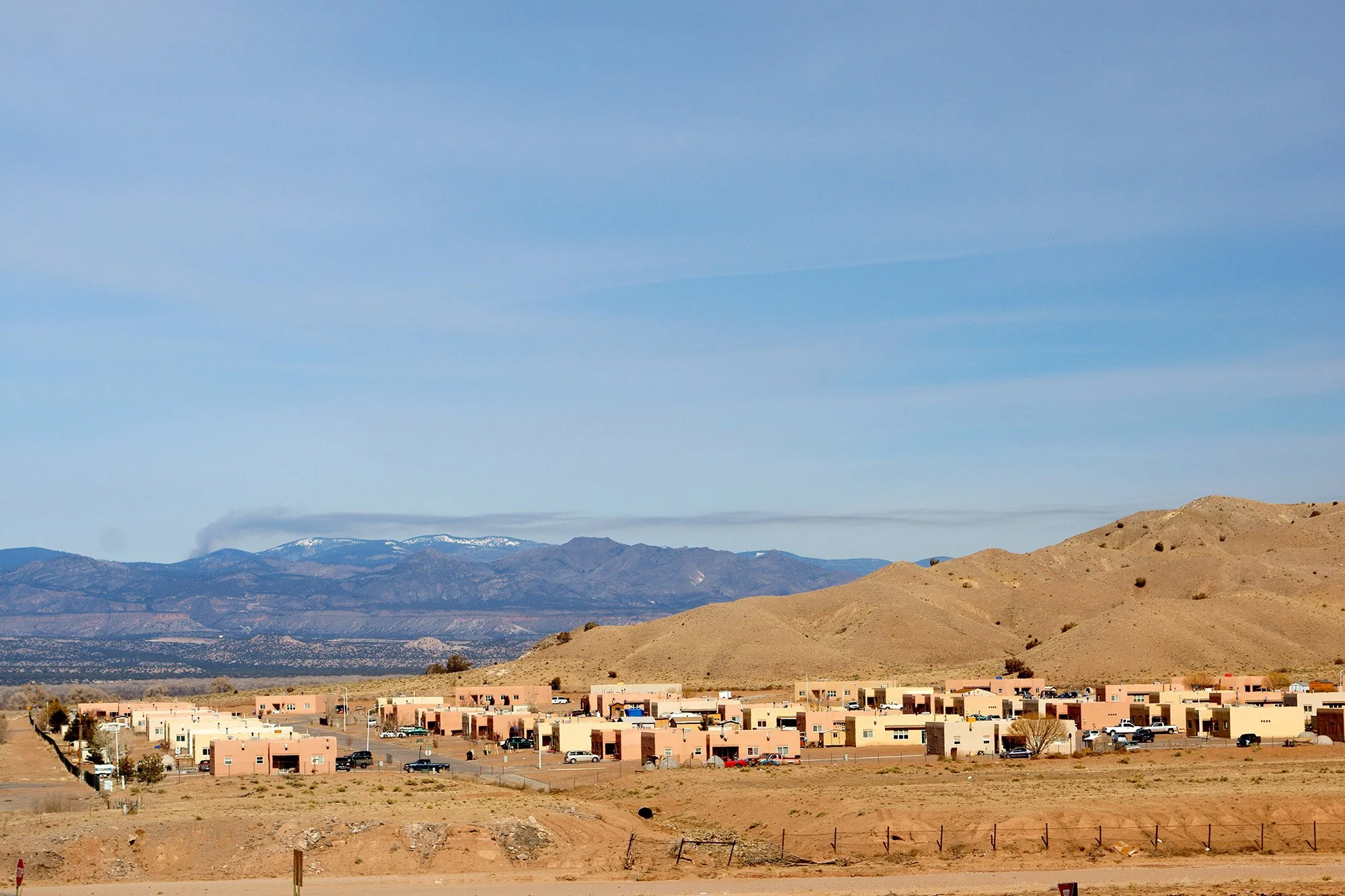
Santo Domingo, New Mexico.
Did you know some of the oldest continuously inhabited places on Turtle Island are in the American Southwest? The Hopi and Acoma villages, the earliest known settlements in the US, were established in 1100 CE (though local knowledge and archaeological evidence suggest it may have been thousands of years earlier). In comparison, St. Augustine, Florida, the oldest European-established city in the US, was founded centuries later in 1565. For generations of Indigenous peoples in the Southwest, the significance of place, the use of space, and the importance of family all influence the way they care for their homes and become respectful stewards of their lands.
There are valuable lessons to be learned from tribal housing, and from Native-led housing studies in the Southwest. Non-Native studies can be seen as prescriptive and are often used to “check the boxes.” I’ve personally witnessed the very real scenario of a firm who said, “We’re planning to build 12 new townhouses. We need the study to show [x, y, and z] to satisfy the requirements of this program.” To be honest, sometimes checking boxes makes sense. As individuals, we need to check boxes. We check boxes to receive a loan; we check boxes to access EBT food stamps; and we check boxes to attend school. But when an organization has both the resources and time to conduct a comprehensive housing study, the impact could be so much more than that.
With suitable funding, a housing needs assessment can be expanded to include community strengths, partnership opportunities, funding and financial plans, workforce development, transportation, child care, local business development, education, and more. All these elements provide the infrastructure that’s needed for communities to thrive — for each house to become a home. The communities we partner with almost always prioritize these connections. To them, this way of thinking isn’t new. It’s a common, systems-based approach used by many Native people who show through everyday actions “we are all related” and “everything is connected.”
Lessons learned from tribal housing leaders
Over the last 17 years, our work with tribally designated housing entities, community development corporations, Native community development financial institutions, and Native-led housing organizations has taught us many things. The collaborative, innovative ways they’re creating a house and home for their communities is a model for relational care.
We recently conducted a housing needs assessment with Laguna Housing Development & Management Enterprise (LHDME), the tribally designated housing entity for the Pueblo of Laguna. By understanding the specific needs and strengths from all six of their villages, they’re developing equitable housing solutions for all their people. LHDME uses virtual housing maps to record individual housing needs, such as window replacement, grading, and plumbing repair, and updates each map after every house call. They’re also partnering with tribal corporations and local educational institutions to offer workforce education, helping community members move from curiosity to training to full-time careers in housing.
The collaborative, innovative ways they’re creating a house and home for their communities is a model for relational care.
We conducted a similar assessment with the Santo Domingo Tribal Housing Authority (SDTHA), a tribal government providing services to the Kewa Pueblo community. They, too, use respectful and effective methods for connecting with their community members. Over 25% of completed housing study surveys came from a Head Start graduation ceremony, an annual event that the community looks forward to attending each year. By accessing housing surveys shared at the event, residents had the opportunity to provide feedback while waiting for the ceremony to begin. For Native first-language speakers, SDTHA hosted a community meal and feedback session allowing residents to discuss housing needs and solutions in Keres 一 their heart language.
The Pueblo of Jemez Housing Authority (POJHA) was the first tribal housing authority in the Southwest to entrust us with a housing study. POJHA provides housing and financial support to the Jemez Pueblo community, and their innovative ways of gathering information guide our approach to this day. For the study, they mapped their community into four zones so that housing needs could be honed to each specific area. They also incentivized residents to participate by purchasing meals from local food trucks and giving them to people who completed the survey during its final stretch. And while the survey was open, POJHA staff hosted weekly Facebook Live events and conducted on-air prize giveaways.
Housing efforts that respect tradition and community
Across the Southwest and Turtle Island, inclusive, multi-generational housing solutions are underway, and have been for years. To address overcrowding while honoring the tradition of multiple families living under one roof, tribal housing authorities have used mother-in-law suites in home remodels for decades. They’re also rezoning the land to allow accessory dwelling units (ADUs). An ADU can give an elder who needs extra care or a young family who is saving for their own home the opportunity to co-habitat and share meals with others but still have privacy. US Department of Housing and Urban Development (HUD) requirements can make this financially challenging, but tribal housing advocates are making headway on educating government programs on the importance of multi-generational housing.
Some housing entities are focused on policy solutions, and some on purchasing and developing fee land. Others, like the Spokane Indian Housing Authority in Washington State, are centering workforce development and student housing. The historical trauma that Native peoples and landscapes have endured requires intentional collaboration and innovation to develop sustainable, culturally responsive housing solutions. Below are some of the organizations heeding that call and filling critical needs that are unique to local communities:
The communities we work in have been living with and adapting to environmental and geo-political change since time immemorial. This isn’t news to many, but it deserves more attention in standard discourse. Of particular note, and something we should all learn from because it has the potential to affect thousands of communities around the country, is the intentionality behind truly hearing and listening to a multitude of community members. Comprehensive, holistic planning must recognize the importance of Native lifeways and connections as we continue to imagine and reimagine community spaces. Checking our pulse as a community is much more important than checking a box.
Share