How Tribal Nations are keeping clean-energy projects alive after federal funding cuts
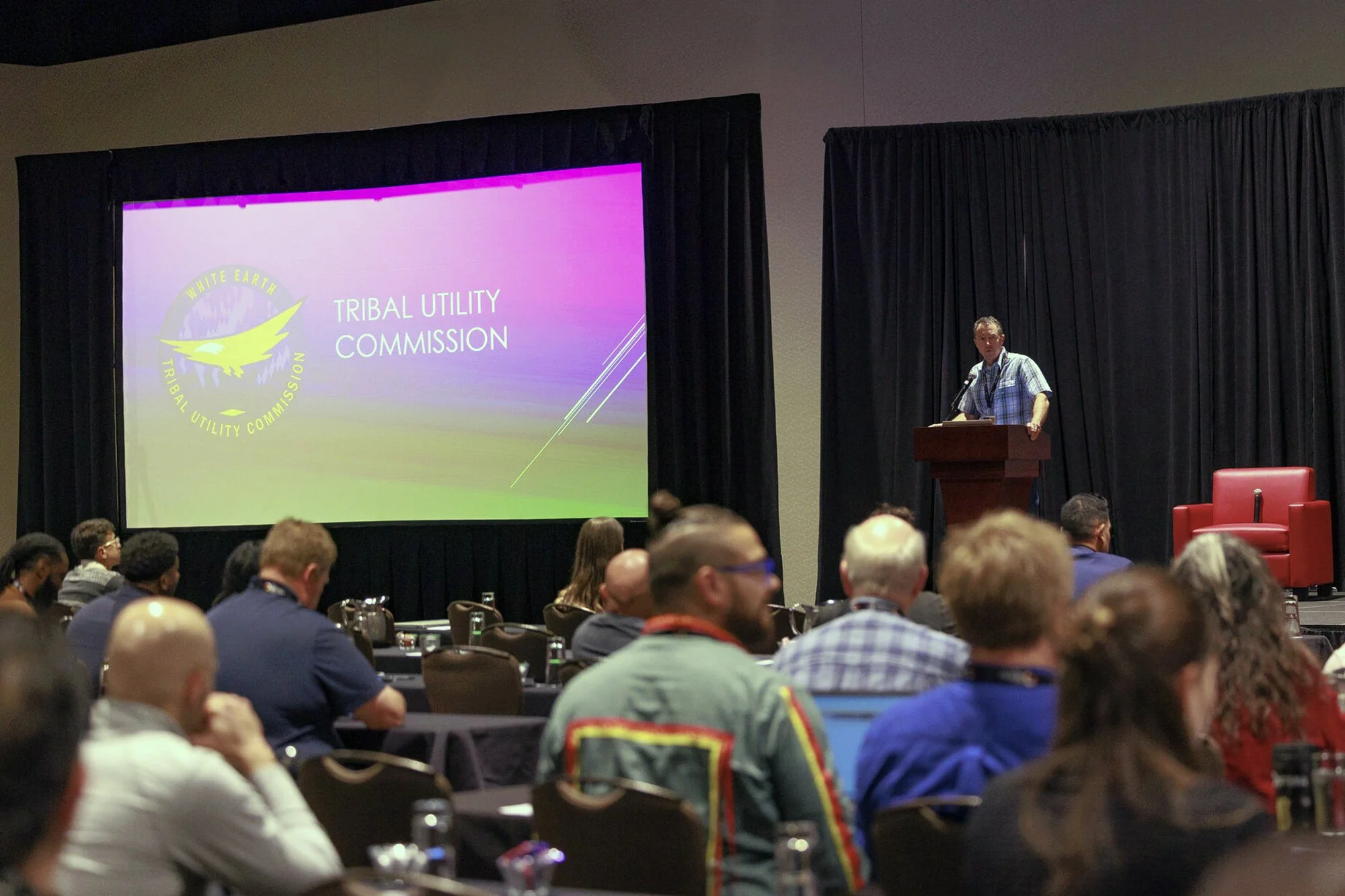
White Earth Nation’s Tribal Utility Commission presenting on building governance, infrastructure funding, and energy policy.
Last September, Andrea and I were in Milwaukee, Wisconsin, to attend the MTERA Annual Summit along with several dozen other attendees. It was early in our strategic planning project with MTERA, and we were there to learn more about tribal energy work in the region. A major federal funding shift had just been announced, and tribal energy leaders responded quickly and strategically, sharing insights on how to navigate changing policies, secure alternative funding, and continue advancing projects despite uncertainty.
Leaders emphasized the importance of strengthening internal capacity and shifting from federal grants to tribal and private investment partnerships to keep momentum moving forward. Their discussions reflected both urgency and resilience, highlighting ongoing efforts in renewable energy development, workforce training, and long-term planning for energy sovereignty. It became clear that even in the face of shifting federal support, tribes were focused on adapting and leading their own energy futures.
For many Tribal Nations, clean energy is about both the environment and sovereignty. It’s a way to cut household utility bills, reduce outages, build local jobs, and gain more control over how power is produced on tribal lands. This work long predates the Biden administration, and it will certainly outlast the current Trump administration.
President Trump’s return to office dramatically changed the federal financing landscape around tribal energy. Tribes and tribal-serving groups spent years preparing for projects that are now frozen, narrowed, or canceled. In some cases, money that was announced for tribal-serving projects disappeared before it could even be put to work.
One of the clearest examples was EPA’s Solar for All program. In April 2024, the EPA announced $7 billion in awards nationwide, estimating the program would help more than 900,000 low-income households deploy distributed solar and generate more than $350 million in annual bill savings. That promise began to unravel after Trump took office.
Back in August 2025, the EPA said it stopped implementing Solar for All because the Working Families Tax Cut repealed the agency’s authority to run the program, so it rescinded all remaining funds. Brookings estimates that the One Big Beautiful Bill Act could mean roughly $1.5 billion less in future federal green-energy spending for Native American tribes. Tribal energy was hit in two ways at once: first by freezes and clawbacks affecting active projects, then by statutory changes that cut off a large share of the pipeline tribes were counting on for future development.
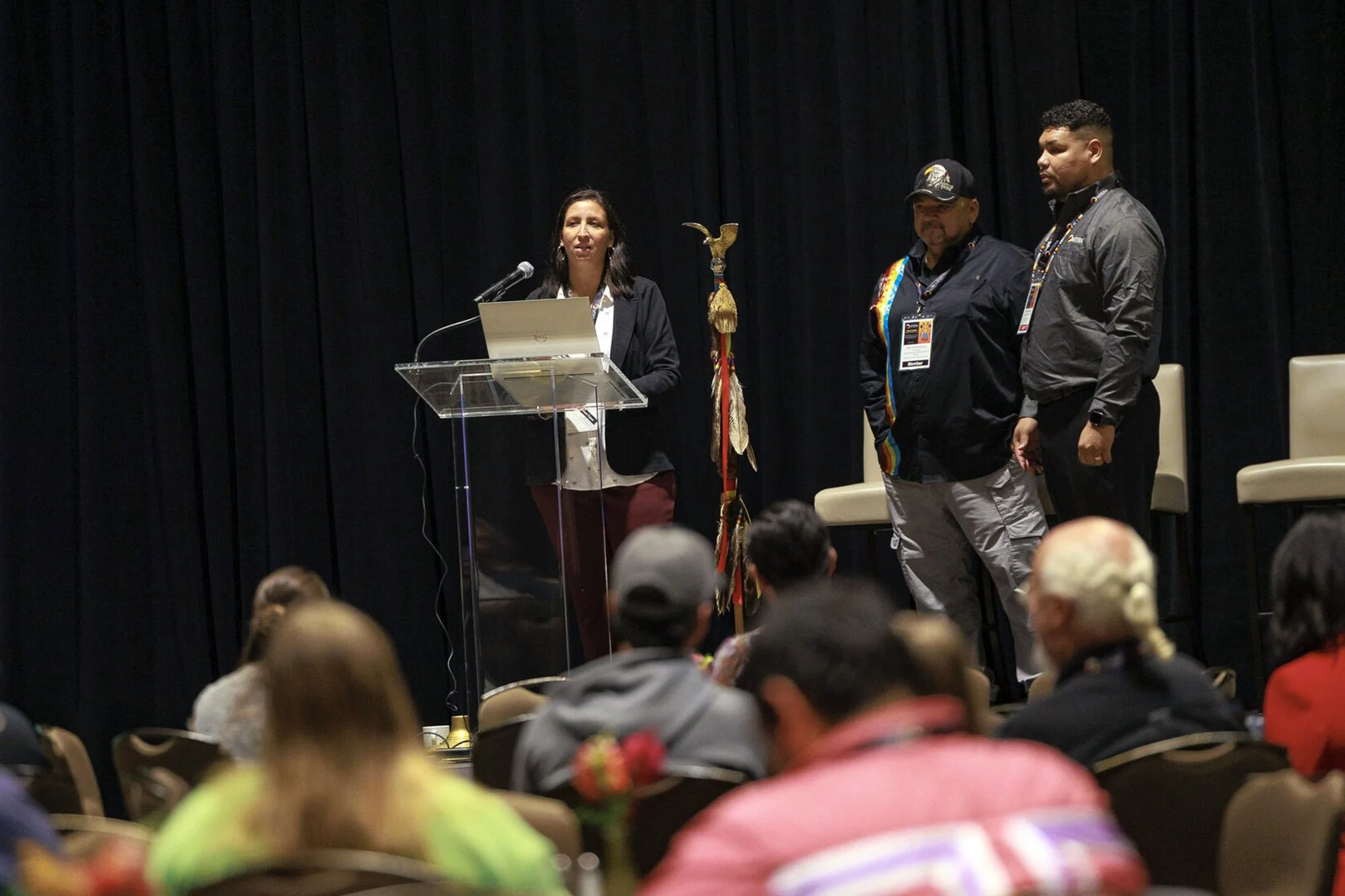
Leslie McLove, MTERA’s COO, speaking during the MTERA Annual Summit.
A fundamental shift in project funding
The scale of the disruption has been substantial. In 2024, the Alliance for Tribal Clean Energy’s grant-writing team helped secure $484 million in grants awarded to 46 tribes. According to their CEO, Chéri Smith, 85%–90% of those grants have since been clawed back. The Alliance also estimated at least 100 tribes were facing cuts and bottlenecks following the rollback of Biden-era clean-energy support. This policy shift has hit real projects that were already moving from planning to implementation.
The mood in Indian Country has been frustration, certainly, but also a weary recognition that federal whiplash is familiar. Chippewa Cree Energy Corporation CEO Joseph Eagleman described the Solar for All loss as landing just when partners were “getting ready to take off.” On the Northern Cheyenne Reservation, Tina Cady described not so much betrayal as exhaustion, saying repeated reversals continue to teach people not to trust promises too quickly. David Harper of Huurav, the Colorado River Indian Tribes’ financing entity, said the clawback was not surprising and would only force tribes to create a better path for themselves.
This hard-earned realism is what moves projects forward in Indian Country. Tribal leaders and tribal-serving organizations are trying to preserve work that’s already been done, even though grant money has disappeared. The 14-tribe Tribal Renewable Energy Coalition is still using the solar project plans it developed under its now-canceled $135 million Solar for All award and is looking to loans and philanthropy to finance the next stage. The Alliance for Tribal Clean Energy has been helping tribes build new “capital stacks” and connect with investors so projects can be financed with private dollars instead of public grants. That phrase, “capital stacks,” may be the quiet center of this whole story: Federal support has become so unreliable that tribal energy projects now require full-scope finance packages.
That pivot is showing up in concrete ways. A $250,000 bridge loan from the Indigenous Power & Light Fund helped keep a Metlakatla Indian Community project moving in Alaska by covering a financing gap tied to an undersea power cable. That bridge then helped unlock a $5.2 million bridge loan from Native American Bank and Oweesta to help the project continue. Tribes are turning to philanthropy, low-interest loans, nonprofits, and tribally oriented financial institutions to keep clean-energy work alive.
Some tribes are also broadening what counts as a politically fundable energy strategy. The new DOE tribal funding opportunity is framed around “affordable, reliable, and secure energy development” and encourages proposals that support “firm, reliable power.” The new funding totals $50 million, and with awards up to $7.5 million and zero or 10% cost share depending on project type, that could move some projects forward. But the language around reliability and fuel flexibility also suggests that projects must closely fit current federal priorities and not the older decarbonization-centered messaging of the Inflation Reduction Act era.
On its own, the DOE’s new program is meaningful. It offers deployment awards and separate pre-development funding for community-scale and large-scale projects. That gives tribes a new opening to fund project planning as well as execution. But against the loss of more than $500 million in tribal Solar for All awards and Brookings’ estimate of roughly $1.5 billion in broader future losses, it could be a short-term remedy. The response to the program has been cautious. Tribal energy leaders aren’t dismissing the new money, but neither are they treating it as anything close to a substitute for what was cut.

MTERA staff present at the Summit.
The ongoing need for tribal clean energy
Energy needs on tribal lands remain urgent. The DOE’s 2023 Tribal Electricity Access and Reliability report found that the average energy burden on tribal lands is 28.3% higher than the US average. 14,063 Navajo homes and 878 Hopi homes lacked access to electricity, and electrifying the Navajo homes alone could cost almost $1 billion. In many tribal and rural communities, energy policy determines whether families can afford power, whether communities can rely on systems that don’t fail, and whether homes can be connected at all.
That’s why canceled projects are so negatively impactful. One of the most visible setbacks was the Tribal Energy Resilience and Sovereignty (TERAS) project in Northern California. The project planned to help four tribes develop tribe-owned-and-operated nested microgrids, cut outage hours by 90% compared to 2022, and host more than 20 megawatts of clean-energy resources. Federal funding was listed at $87,629,455, but the award was canceled under the current administration. For communities facing repeated outages, this kind of loss threatens their resilience.
So, what exactly has happened to tribal energy funding since Trump took office? The clearest answer is that it’s become more unstable, more fragmented, and more political. These major funding streams have been frozen, clawed back, or repealed. But that’s only half the story.
The deeper truth is tribal clean energy has never depended entirely on Washington’s enthusiasm, even if federal money often decides the speed and scale of what gets built. Tribes and tribal-serving groups are adapting in ways that will survive this political moment. They’re rebuilding capital stacks, leaning on Native CDFIs, using bridge loans, pursuing philanthropic support, preserving project development work, and strengthening tribal governance over energy development on their own lands.
Native Nations have been persistent about their needs, their values, and their sovereign strengths as planners, facilitators, and developers of their own communities and futures. Some Native-led nonprofits and tribal governments have initiated clean-energy market assessments for 2025–2026. We’ve recently partnered with NACDC, Blackfeet Community College, Plenty Doors Community Development Corporation, Aanniiih Nakoda College, and the Fort Peck Tribes to best understand how governments and partners can respond to energy-related needs. Planning for energy audits, weatherization, energy alternatives, finance, and even transmission potential are being explored in various places across the country. Some of these community-based organizations are preparing to turn those ideas into action.
In this shifting and uncertain landscape, MTERA’s role comes into sharper focus. As tribes navigate funding instability and increasingly complex project development pathways, MTERA provides a consistent foundation. It supports capacity building and fosters collaboration across its growing network of member tribes. The conversations we heard in Milwaukee reflected needs for coordinated funding, shared learning, and long-term planning support. MTERA sits at the center of that ecosystem in helping tribes translate ambitious action toward energy sovereignty despite changing federal priorities.
Share