Is there a thoughtful and culturally responsive way to use AI?
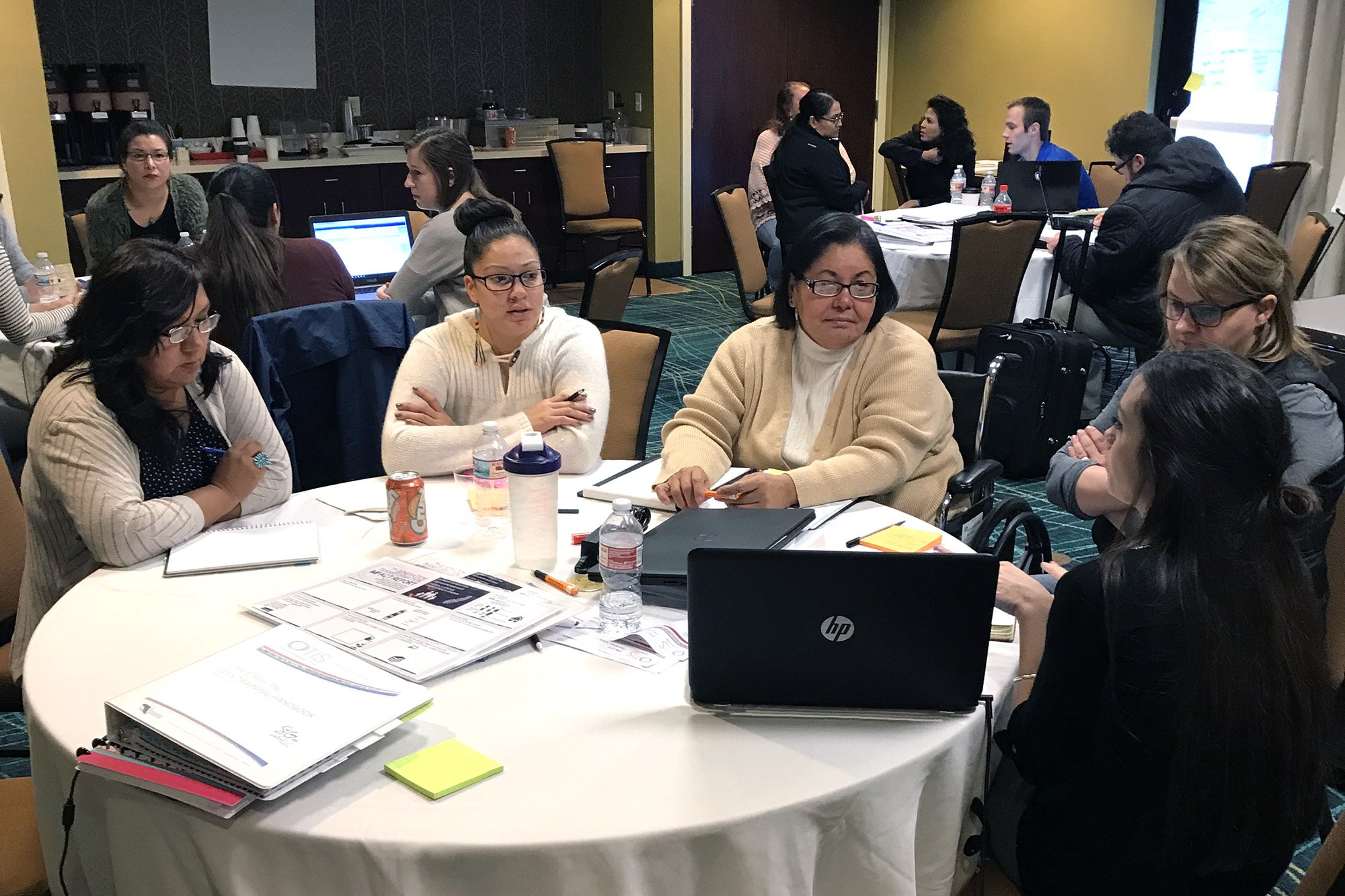
Users are trained on a new database system.
It’s become increasingly difficult to ignore AI. It’s brought up at every conference, it’s in most tech sales emails, and you’ll often find an AI notetaker in virtual meetings. AI has become a buzzword for nearly every client and industry we work with, and it promises to change nonprofits for the better. It’s a big promise with little transparency about what it actually takes to fully implement and embed AI into your nonprofit’s day-to-day operations in a useful, safe, and error-free way.
There's also not much mentioned about the environmental impacts or clarity around what AI is actually doing with your data. AI companies are good at inducing a sense of urgency to use their products and making you think you’ll be left behind if you don’t, but AI is not going to solve every problem your organization has. It also can’t be implemented in a meaningful way overnight.
Nonprofits and mission-driven organizations tend to prioritize service delivery and programmatic work, leaving technology to fall to the backburner. As AI continues to develop, that’s changing. Nonprofits are increasingly interested in what AI can do for them, and has become the topic of many internal conversations. There’s still much to be understood and uncovered, so we’re sharing what we’ve learned helping nonprofits think through how they currently use AI and how they could use it in the future, if at all.
Environmental and economic impacts
In our Salesforce work with clients, we don’t suggest going “all in” on AI solutions right out of the gate. Yes, AI can help streamline your work and help your staff do repetitive tasks quicker, but it should be used with caution. You need to be hyperaware of the information you’re putting into AI tools, especially when it comes to Indigenous knowledge and data.
According to the American Indian Policy Institute, “current AI development often overlooks Indigenous perspectives. Publicly available datasets may underrepresent, misrepresent, or exploit Native cultures, languages, and histories. In some cases, data has been used without consent, raising concerns about surveillance, ownership, and long-standing patterns of erasure.” Because of this, Sweet Grass never puts client or sensitive data into AI because we can’t be 100% sure of where that data is going or how it might be used. Further, AI can and does make mistakes. You have to thoroughly review and fact-check everything it comes up with.
As is true with most software, AI isn’t something you can simply turn on and start reaping the benefits from. You still have to tell it what to do and when, and that takes planning and time to implement. AI is a quickly changing industry and even companies like Salesforce have already had multiple iterations of their AI products, forcing customers to make updates to solutions they've only just implemented. That’s why we recommend starting small by identifying real, tangible ways to help your staff improve their daily work.
When implementing AI tools into a CRM or database like Salesforce, you need a clear vision for what the tools should be doing, why they should be doing them, and when. Many of the clients we work with have exceptions or caveats to already complex processes, and when you have to tell AI about every detail or scenario, it can get tricky. The system quickly becomes messy or inaccurate when it does things like send the wrong information in an email or trigger a notification too soon in the process. For reasons like these, we always recommend a comprehensive discovery phase before implementing a new data management system or process. A pre-planning stage is vital in helping you understand the problems you want tech to solve and what it’ll take to get you where you want to be. Oftentimes this involves revisiting and refining processes to be as clear and straightforward as possible.
Aside from managing the intricacies of processes that incorporate AI, it requires access to a reliable broadband connection. The American Indian Policy Institute references a 2019 study that estimates only “31% of tribal homes have fixed broadband access,” which means reliable broadband is a barrier to AI for remote, rural communities. Nonprofits need to be aware of their staff locations and potential internet limitations of their community if AI tools are to be fully embedded into the organization’s processes.
Lack of resources continues to be a concern in the adoption of AI for nonprofits. The Chronicle of Philanthropy conducted a survey to gather insights on tech use by nonprofits, and over half of respondents said they’re not using tech in an advanced way. Unsurprisingly, budget constraint was the number one barrier to tech adoption according to 88% of respondents, followed by the lack of time to vet and implement technology (62%). Tech is not cheap: You have to purchase the tool itself, then often hire a specialist or consultant to implement it for you. The cost, and time, stacks up quickly, which is why we recommend having a clear vision from the get-go to avoid unexpected costs and setbacks. This might look like doing internal research on available tools, use cases, and case studies before engaging with a consultant.
Beyond infrastructure and budget constraints, environmental impacts are becoming more and more known and worrisome. According to the United Nations Environment Programme, “there is a negative side to the explosion of AI and its associated infrastructure, according to a growing body of research. The proliferating data centers that house AI servers produce electronic waste. They are large consumers of water, which is becoming scarce in many places. They rely on critical minerals and rare elements, which are often mined unsustainably. And they use massive amounts of electricity, spurring the emission of planet-warming greenhouse gases.”
The National Education Association breaks it down further. Their research shows:
A single generative AI text query consumes energy at four or five times the magnitude of a typical search engine request.
Generating a single image using AI consumes the same amount of energy as charging a phone to full power.
Training one large AI model consumes nearly five times the lifetime emissions of the average American car.
Data centers are giant warehouses filled with endless rows of computer servers that are continuously working to complete tasks. In 2023, data centers used 4% of the total electricity in the US, and that number is expected to jump to 7–12% in the next three years alone.
Setting your team up for success
Despite the impacts, chances are your staff and team are already using AI (in some capacity) in their day-to-day work. We recommend reviewing and reflecting on the following questions to set yourself, your team, and your organization up for success with AI.
Develop an AI policy: Do you have a policy or guidelines for your staff around the use of AI? Make sure you have guidelines in place sooner rather than later. If your organization engages with consultants or other partners, be sure you’re clear in your contracts and agreements on what is acceptable or not for their use of AI and your data. Your policy should be revisited and updated regularly as AI continues to evolve. Here are some resources to get you started:
Assess the current state of your data: If you are planning to implement AI tools to your existing databases or systems, reflect on the state of your data. Is your data clean, accurate, and free of duplicates? Is there data you know is missing from your system? Are your data processes clear and established? If not, AI may create more of a mess and not operate as intended.
Reflect on what you want AI to help with: What problems do you want AI to solve or help alleviate that staff cannot? Decide whether these tasks or processes can afford losing a human touch.
Review the data you want to put into AI: What risks do you run by sharing that information with AI? For example, is this sensitive client information, Indigenous knowledge, or identifying information? Do your clients know their data is being put into AI tools? We don’t know for certain where it goes, who gets access to it, or how it's managed and stored, so be mindful of what you share.
Consider your time, capacity, and budget: Do you have the internal capacity or understanding of AI to build and maintain a solution for your CRM? Do you have the budget to bring on support to build and manage your AI? Whatever you build will need to be monitored, maintained, and updated.
Align your values, mission, and vision with your AI use: Are the negative impacts of AI misaligned with your organization? Will new processes undermine the work your organization does and stands for? Are your clients, constituents, and communities aware of this use and comfortable with it? Are there simpler ways to improve operations with AI without compromising your values?
After thinking about these questions and what they mean for your organization, you’ll be closer to using AI in the right way for your team, and your community. As AI continues to come up in conversations and in your work, you’ll be more informed and secure in your approach. The industry is changing every day, but regularly reevaluating how and why you use AI tools will help you stay true to your organization’s mission, values, and goals.
Our Implementation team is always available and ready to discuss potential AI solutions for your database management, and we’re happy to be your thought partners and create something that fits your needs.
Share