Akiptan proves “slow and steady” is the way to build an impact measurement system

Ranchers round up cattle at Big Creek Ranch in Wyoming.
Welcome to the first installment of our three-part blog series, Salesforce for Impact Tracking, where we share best practices, lessons learned, ideas, and inspiration for implementing impact-tracking database systems for Native CDFIs and nonprofits.
In today’s world, database systems can be completely overwhelming. It takes a lot of time and proprietary knowledge to set up and administer a new system. Many folks get lost in the weeds of day-to-day data cleaning, data entry errors, and time spent going back and forth with consultants. This is especially true when you have integrations: You need to consider your loan software, your accounting software, and the process of building your own system. Then you have to test it, use it, make edits, and revise it two or three more times until you feel like you have a process and a product that works for you.
This blog series is intended to tell some of that story. From our perspective as providers of wraparound services who've worked with 61 different Native-led organizations in implementing impact-tracking database systems, our focus is on data sovereignty. We want your data to be all in one place and easily accessible in perpetuity, regardless of who comes and goes from your organization. This happens through capacity building and the development of a workforce that’s well-versed in database systems, particularly in Salesforce. Training folks to be familiar with the system, maybe even becoming Salesforce admins themselves, is our goal.
A strong database allows you to tell your story with more concrete quantitative data. You need data points to help extrapolate those hugely important individual success stories. And you can take it even further by supporting grants management, measuring staff performance and time, and capturing regranted funds. This can help increase the capacity of your organization and build a centralized data hub where all your data can be accessed in one system.
Using your data in a “good way” is part of our mission at Sweet Grass. We want you to be able to use your data in all the ways you need, from reporting your impact to developing a solid base for your strategic plan to understanding specific research questions about your portfolio to evaluating development service projects across your organization.
How Akiptan tracks their impact
Our partnership with Akiptan, a Native community development financial institution (CDFI) on the Cheyenne River Reservation, started before they had an impact measurement system in place. We designed their first theory of change in 2018, then helped them develop their first strategic plan in 2021. We collected data by engaging stakeholders using tried-and-true methods, and that investment in research and data grew exponentially in 2022 when we conducted their nationwide agriculture market study. The market study was an independent research project that wasn't tied to a database, but because they’re a forward-thinking organization, Akiptan knew they needed a centralized data hub for that and future projects. Akiptan used the data from the market study to tell their impact story and identified longitudinal metrics they needed to document their lived theory of change.
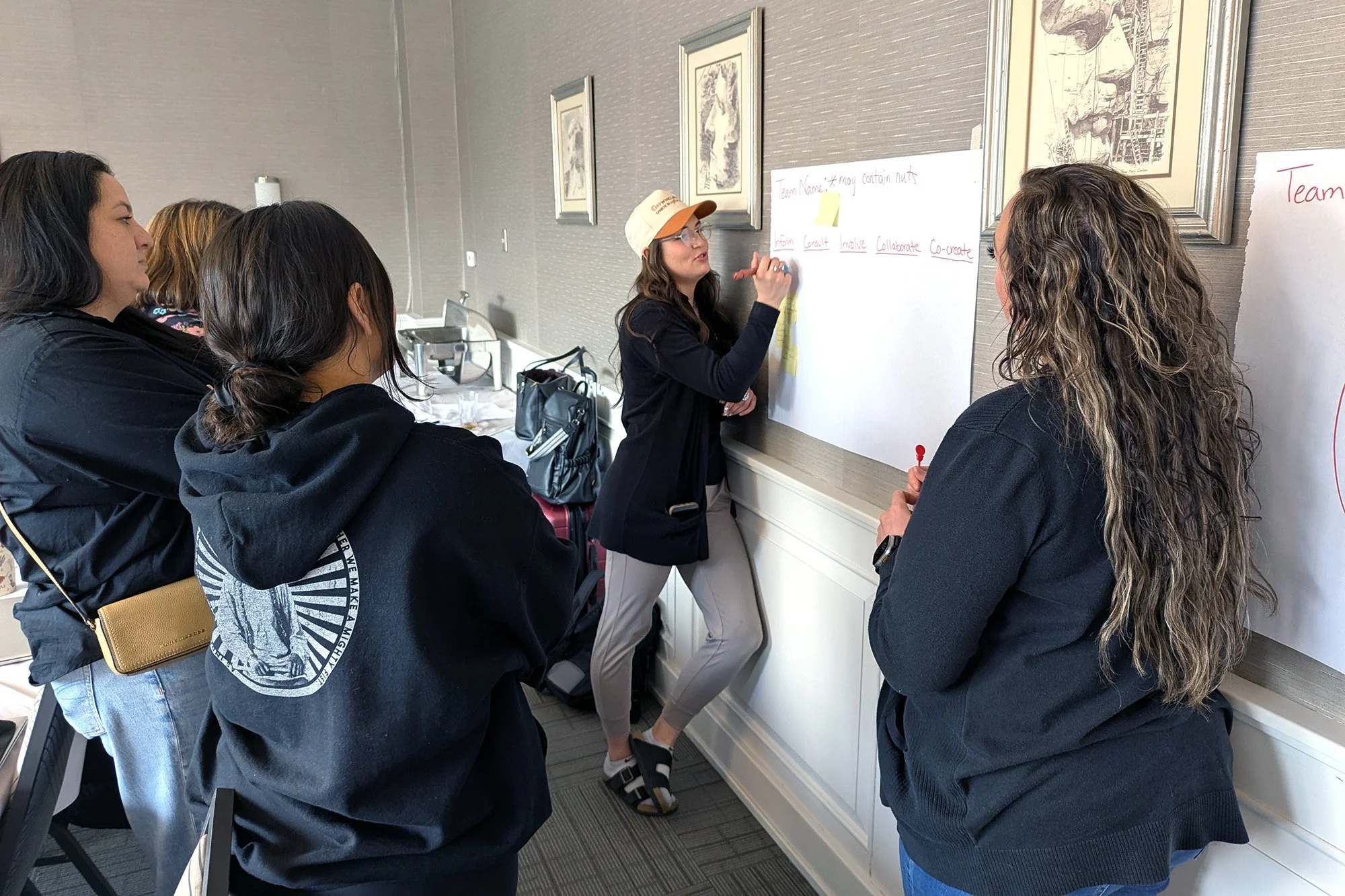
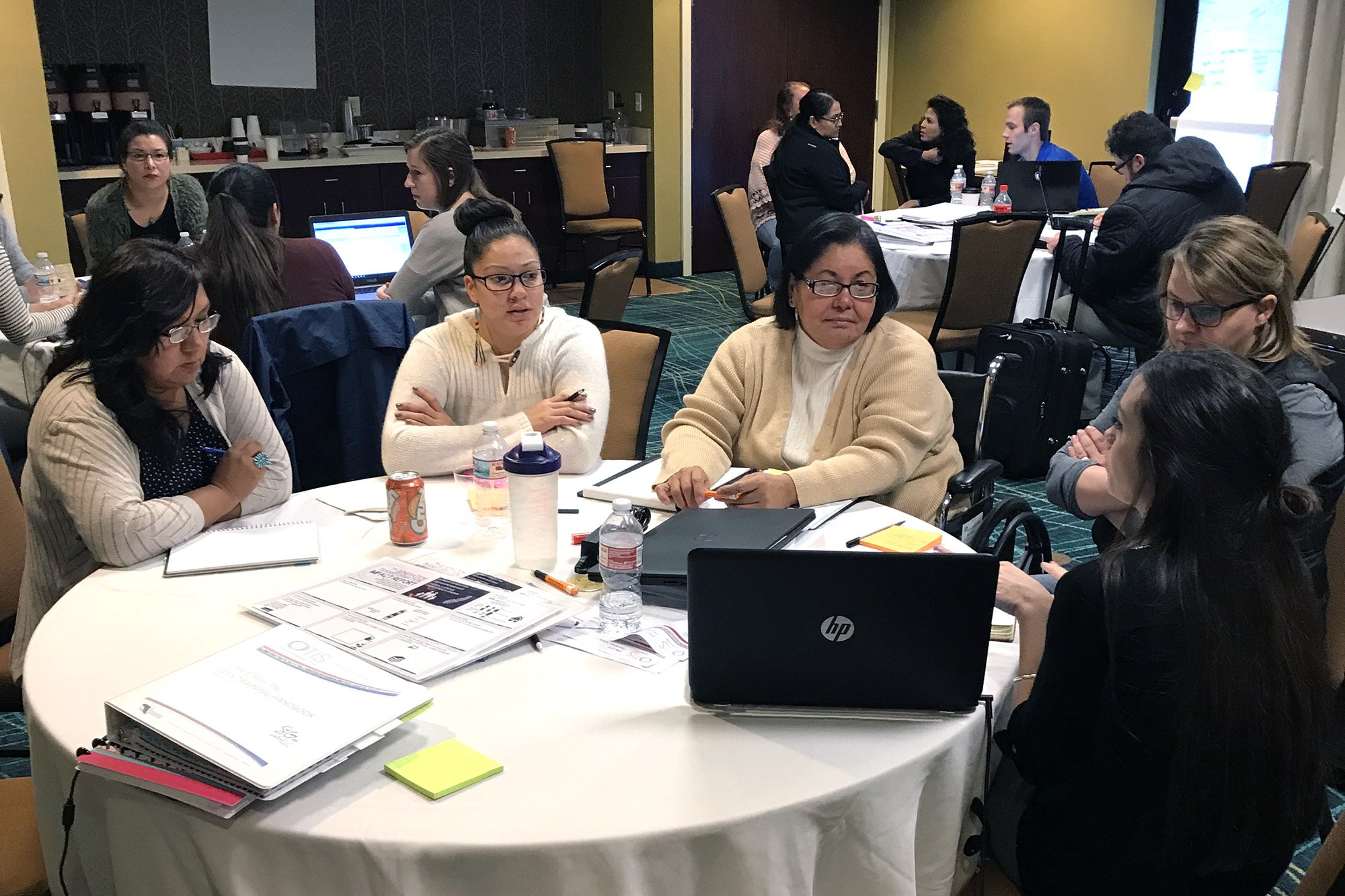
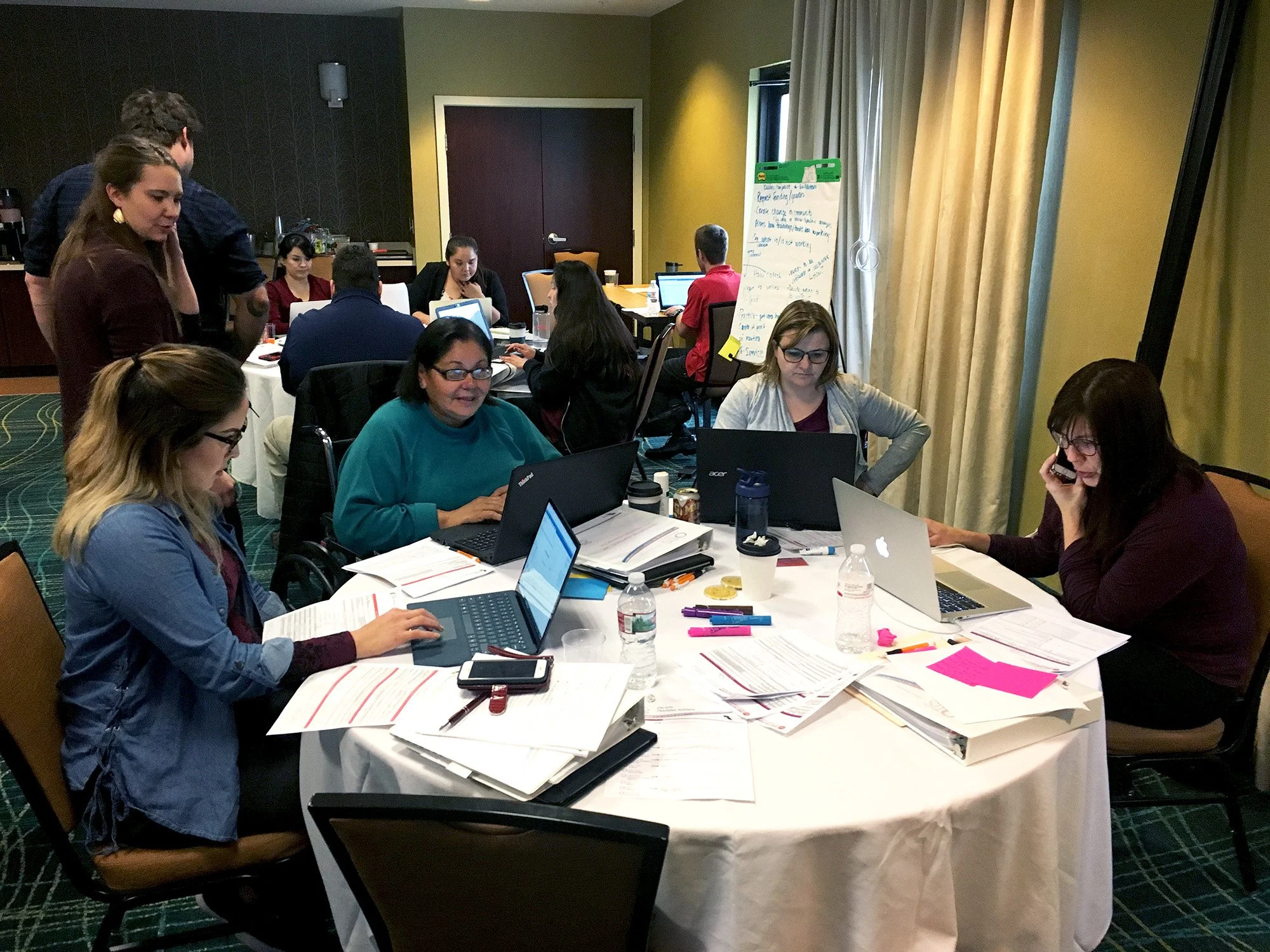
Participants brainstorm ideas during a strategic planning session in Eagle Butte, South Dakota, in 2025.

Strategic planning session in Eagle Butte, South Dakota, in 2025.
As is true for many organizations, Akiptan had lots of data in different places. Some were buried in Excel files, and some were hidden in folks' brains. The team wanted a system that would gather data easily and efficiently. They no longer wanted to comb through files or look through emails and calendars to populate their Excel dashboard, impressive as that dashboard was! They wanted a “live” experience that updated automatically and provided them with the information they needed, when they needed it. Just as important, Akiptan wanted to more thoroughly understand their role in the Native CDFI industry and their impact on the lives and behaviors of the producers they serve.
Akiptan provides lending and financing to ranchers, farmers, and agricultural producers across Indian Country, and for lenders like them, comprehensive impact measurement can help tell the story of producers beyond jobs created, revenues increased, and businesses started. They’re able to tell a story of land conservation, difficulties and successes in accessing federal support programs, and impacts on soil health and sovereignty. In 2021, shortly after completing their first strategic plan, we helped Akiptan build an impact measurement system in Salesforce to capture the data they were looking for, including development services like technical assistance, intakes, and producer management.
Akiptan took their time to build and implement their system, which is why we think they’ve been so successful using Salesforce. Bringing everything together in one place is the goal, but having realistic expectations about the efforts and funding required to do it is the key to its success. Akiptan moves intentionally and thoughtfully, completing tasks in digestible “chunks,” and now they’re seeing a major return on their investment.
These returns are inspiring them to utilize the system even more, especially as their staff becomes more and more familiar with the process. This phased approach gave leadership time to build their expertise and lead by example. And as time has gone on, the team’s confidence has increased, and more and more staff are being integrated into Salesforce. Internal support from team members who already know the system has been instrumental in building organizational capacity and knowledge.
Another example of this phased approach was in Akiptan’s decision not to use a form tool for data collection during their first year of implementation. They relied on manual entry before moving to Formstack for their intake processes, and then slowly added more programs, such as their Owóžu (Garden) Program. From there, Akiptan started tracking grants and fundraising, timesheets, and producer webinars. When the time was right, they moved to fully electronic loan applications.
Having recently completed their second strategic plan, Akiptan is investing even more into Salesforce. They’re tracking metrics related to their strategic planning goals, and they’re integrating TEA (The Exceptional Assistant), a loan management software for non-traditional lenders. Akiptan is also capturing data that highlight their role as a Native CDFI industry leader. As they continue to engage at national conferences and provide mentoring and advising to CDFIs and organizations, this work can now be tracked in Salesforce. Akiptan intuitively knew the work was being done, but having the data allows them to report on the progress and give more purpose to their storytelling.
Telling Akiptan’s impact story
In gathering data for Akiptan’s recent 2025 impact report, we could easily showcase their impressive growth and impact. The results showed that more loans were closed, more money was distributed, and more technical assistance was provided to producers.
The ability to view live information at any point in time also allows Akiptan to be much more responsive to what they're seeing in their portfolio. This, in combination with the technical assistance they're providing, topics of webinars they're producing, and feedback from loan clients, means they’re more nimble and better able to make informed business decisions.
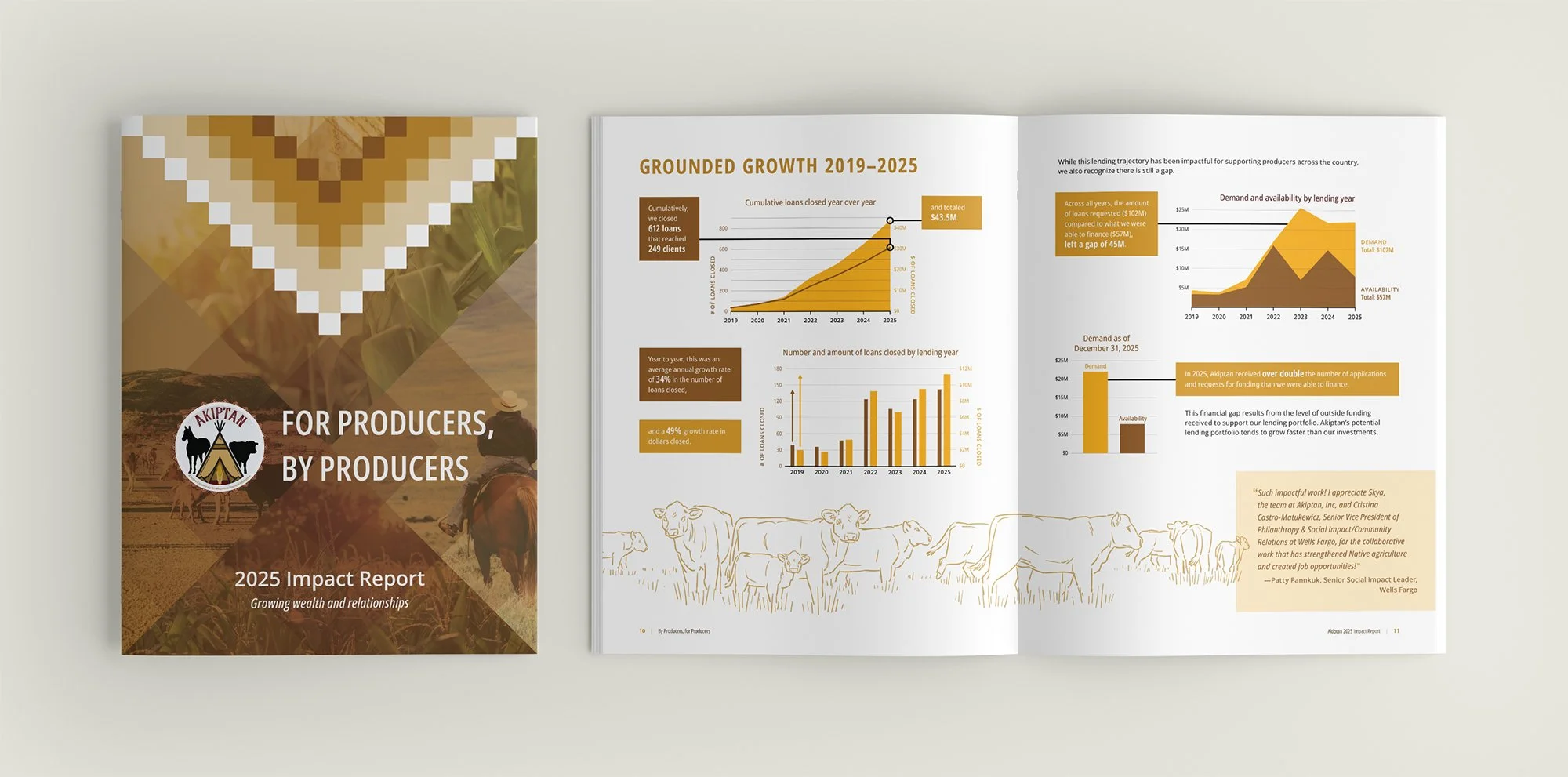
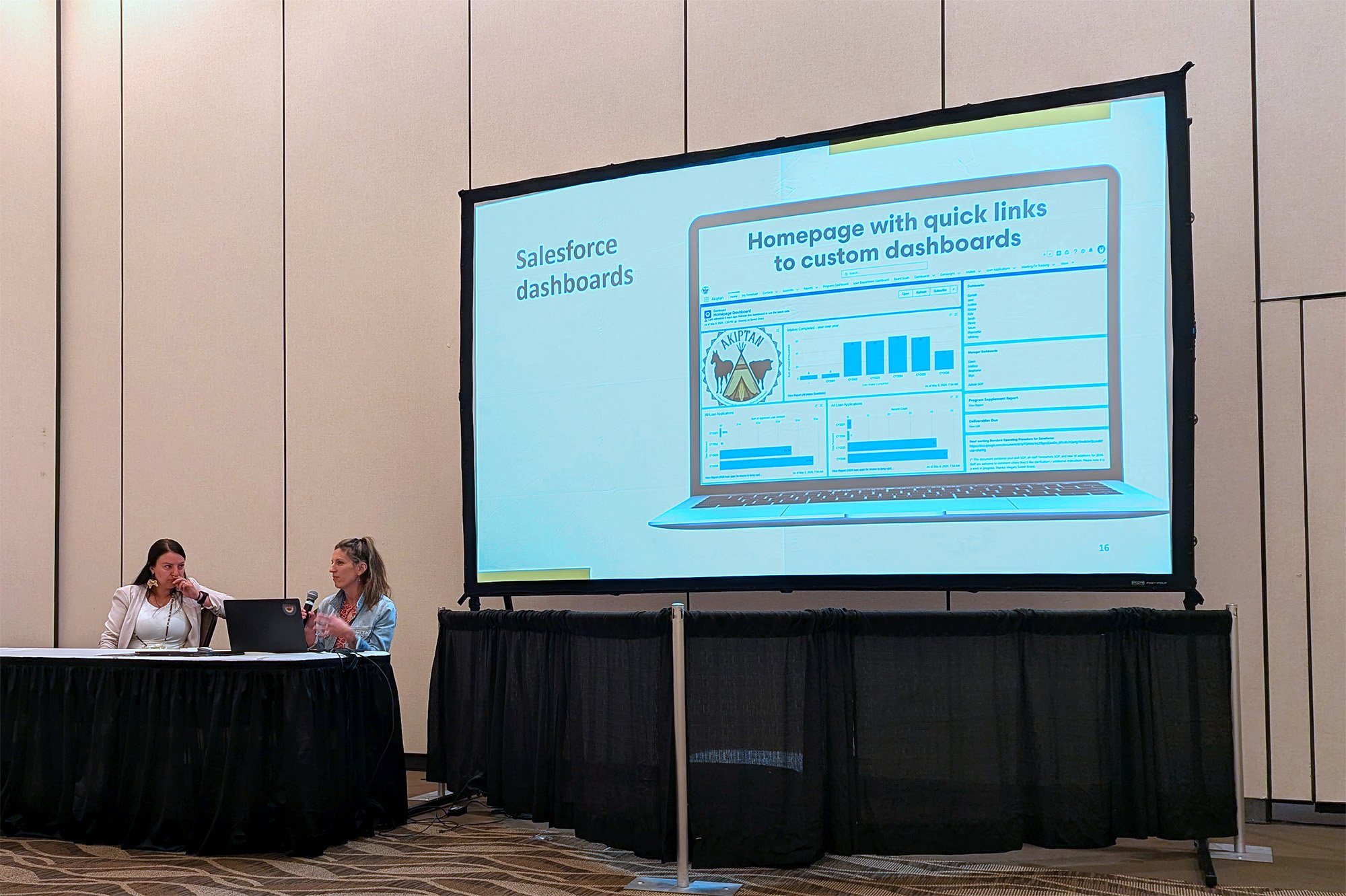
Akiptan’s 2025 impact report features data from their Salesforce dashboards.
We were excited to capture and quantify the financial advantages and efficiencies in Akiptan’s database work in a recent video series featuring Native CDFIs.
What we found:
There’s been a 63% reduction in the number of hours it takes to report on the technical assistance they provide to producers. That means Akiptan is able to bring vital technical assistance to an additional 10 producers each year.
They’ve dramatically increased their efficiency in reviewing and cleaning their data. They used to do routine cleaning every quarter or at the end of each year, but now it happens on a weekly and monthly basis. This has reduced the need to recall things from memory and revisit files.
With the time they save, they can provide technical assistance to another five producers each year, meaning they spend more time with producers and less time on busywork.
This allows them to serve a total of 15 additional producers each year. That’s over $1.3 million in potential loan volume for 2026, and $7.6 million of potential from 2026–2030.
Akiptan is making remarkable and intentional progress on creating a one-stop shop for the entirety of their loan and impact data. They continue to make deliberate headway as they build a more complete lending data picture, and that’s helping improve services for agricultural producers across Indian Country. Unlike the “move fast and break things” mentality of mainstream tech, Akiptan proves time and time again that thoughtful, strategic planning is their best investment.
Share