Making Salesforce more sustainable for Native CDFIs
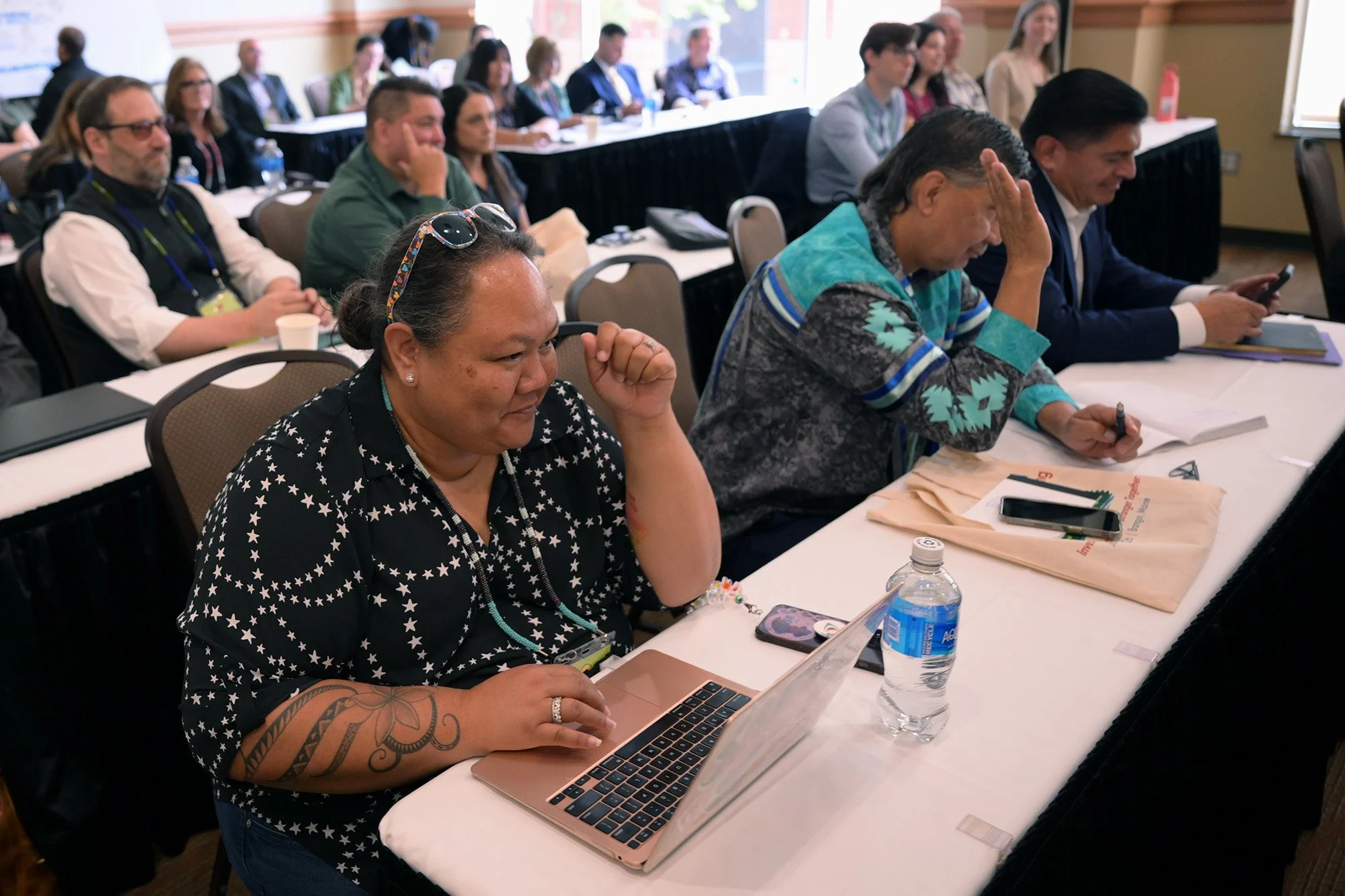
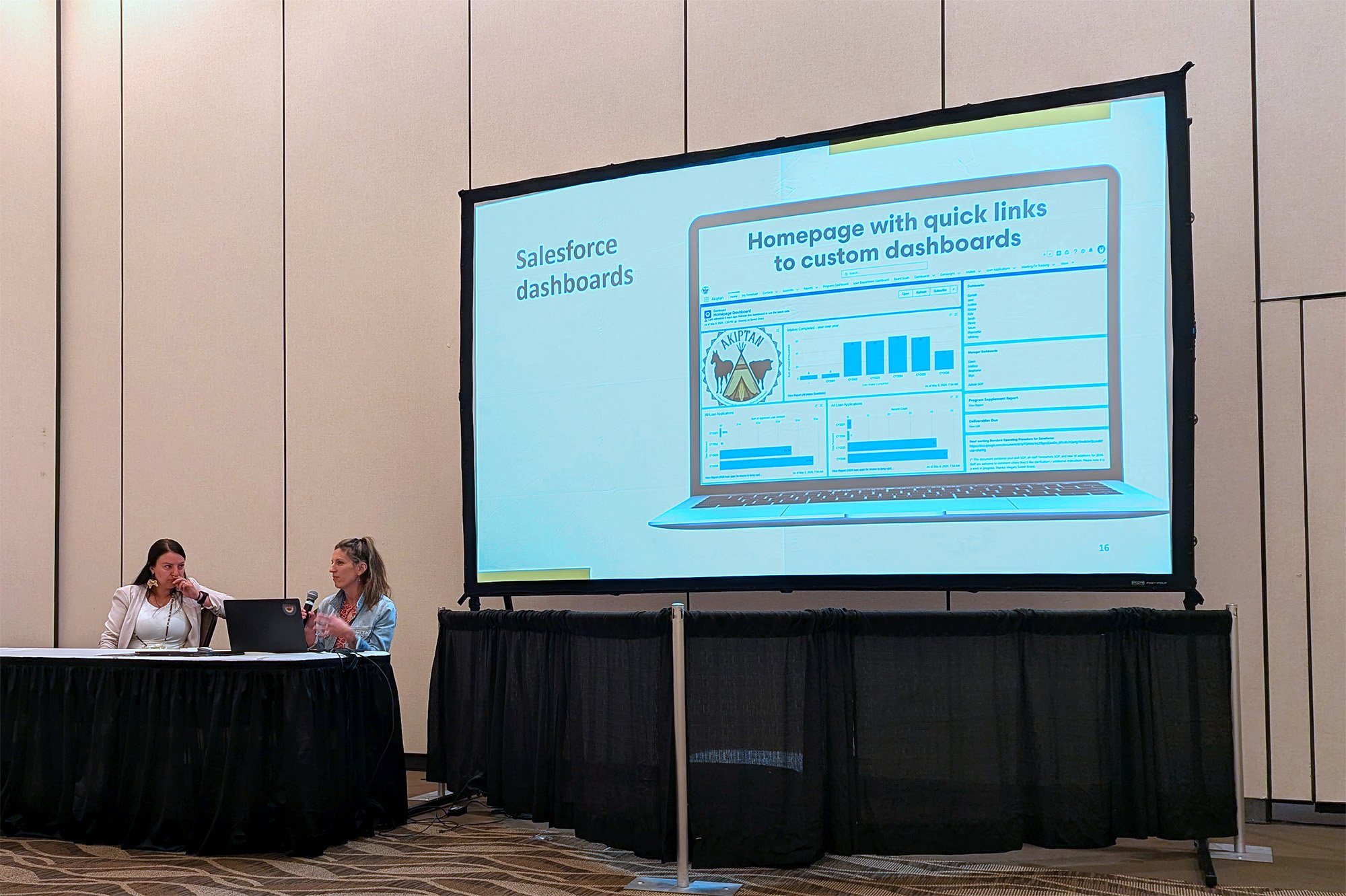
Attendees at the Capital Access Convening in Bangor, Maine, in June 2026. Photo courtesy of Oweesta.
Welcome to the final installment of our three-part blog series, Salesforce for Impact Tracking, where we share best practices, lessons learned, ideas, and inspiration for implementing impact-tracking database systems for Native CDFIs and nonprofits. If you missed parts 1 and 2, read Akiptan proves “slow and steady” is the way to build an impact measurement system and NACDC builds community using research and trauma-informed practices to catch up!
Our database implementation services started as a way to support our clients in their need to collect, manage, and use their own data. For years we’d been working with organizations on strategic planning, market and feasibility studies, and annual reports, and we recognized the gap in a local, accessible way for them to utilize the data they were already collecting. We wanted clients to spend less time entering information in multiple places and stop counting numbers from emails, calendars, and paper files to assemble their reports.
One of the first things we did was help organizations better define the data they truly wanted and needed to collect. Using a culturally appropriate framework (summarized in Best Practices in Impact Tracking for Native Community Development Financial Institutions, a report we wrote in partnership with Oweesta) we’ve been able to meet each client where they are. And technology has always been an important part of that framework. Our implementation process started with Microsoft Excel and Access, then Outcome Tracker, and eventually Salesforce. Since that time, we’ve been developing systems and implementing technology solutions, all while working alongside organizations. We’ve watched their needs change over time, and as a result, we've gathered a good deal of knowledge and resources, especially in using Salesforce for impact measurement.
Today, Salesforce is a substantial part of our work with Native CDFIs. We work with organizations who are implementing Salesforce for the first time, who are expanding or rebuilding existing systems, and who are seeking ongoing administration and development support. As the work has matured, we’ve also gained enough history to understand the benefits of investing in a database solution.
As we highlighted in Akiptan proves “slow and steady” is the way to build an impact measurement system, Akiptan’s staff spent less time providing more technical assistance to producers. The result was roughly $1.3 million in potential additional loan volume in 2026, and $7.6 million between 2026 and 2030. In NACDC builds community using research and trauma-informed practices, we showed how NACDC’s long-term practice of impact tracking resulted in a 1:33 investment ratio, where every $1 invested brought in $33 in grants and loans. In both of these cases, Salesforce enabled staff to provide more support and gather more resources which resulted in more and increased outcomes. The objective is to leverage technology to increase the impact and outcomes of Native CDFIs.
The role of people, relationship, and connection in the use of Salesforce as a supportive technology tool is built on the foundation of how Native CDFIs serve their clients and communities. Research has helped document what Native CDFIs and their clients have long understood about the importance of relationships, local knowledge, customized services, and a willingness to continue working with people who are poorly served by conventional financial institutions.* We see many of the same dynamics in our own work with Native CDFIs.
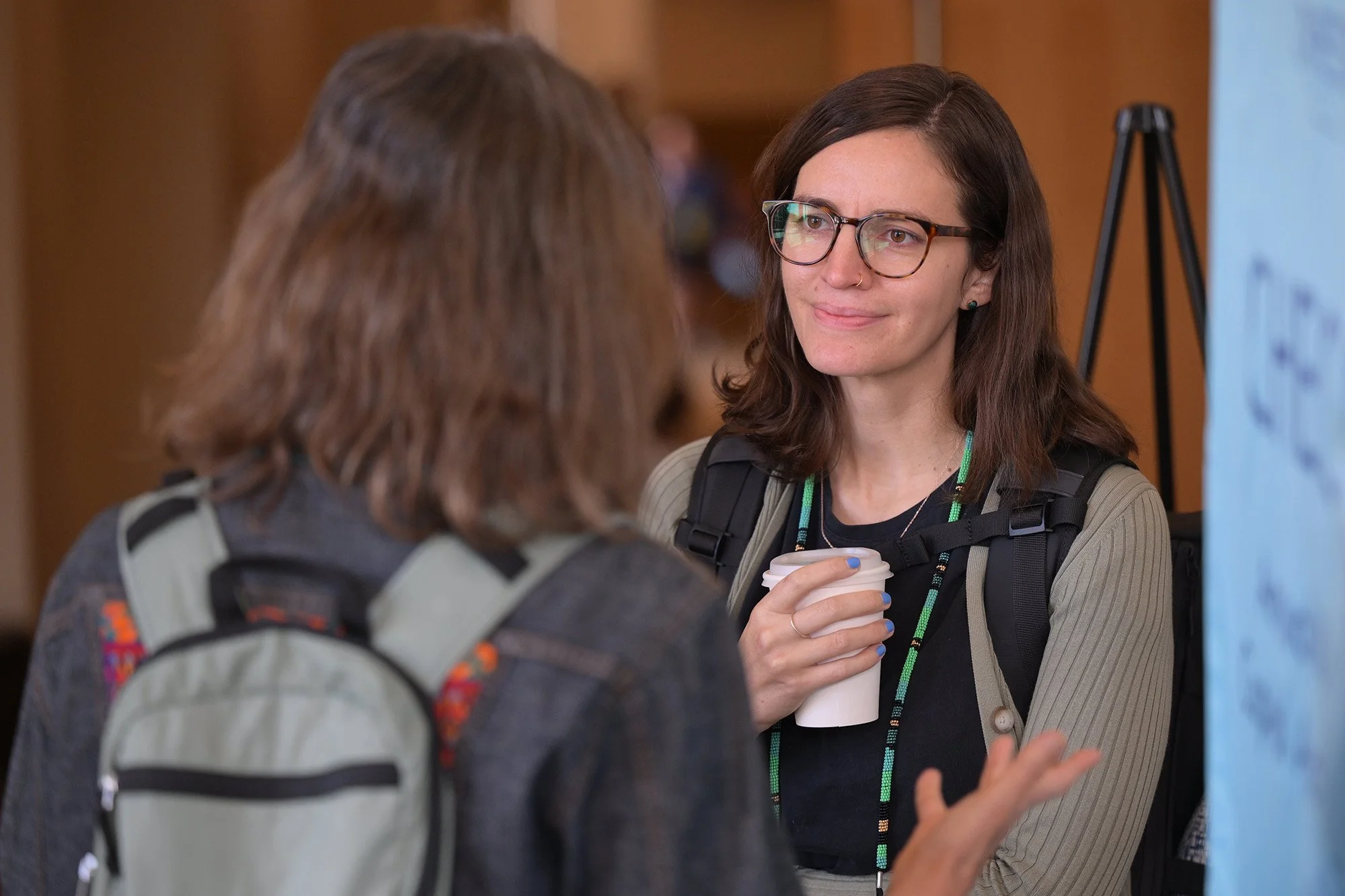
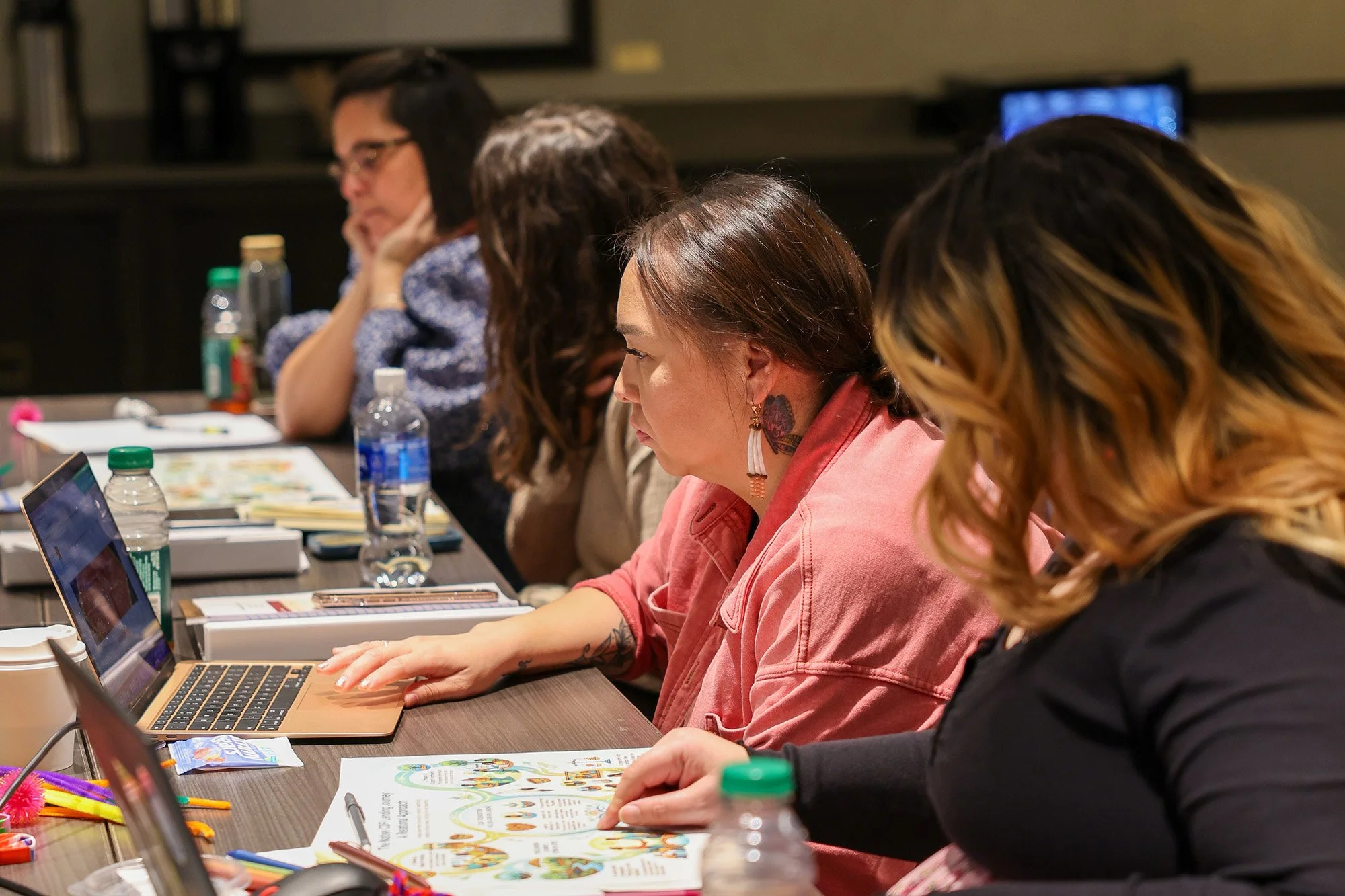
Jackie Carter, associate research director, speaks with a fellow attendee at the Capital Access Convening in Bangor, Maine, in June 2026. Photo courtesy of Oweesta.
A braided-capacity approach
As our tenure providing Salesforce support has grown, we recognize that while launching a functional system is important, the value of that system will ultimately be determined by what happens in the years that follow. Salesforce requires an ongoing investment in staff time, maintenance, training, data quality, system improvements, integrations, and specialized technical support.
Organizations need people who understand why the system is structured the way it is, recognize when data quality is slipping, train new employees, communicate changing program needs, and understand enough about Salesforce to know when specialized assistance is required. Leadership and staff also need to see the system as useful organizational infrastructure rather than another reporting requirement. These have become some of the most consistent sustainability issues across our Salesforce work.
Adding these database responsibilities to an already constrained team can feel overwhelming, and it highlights the value of receiving ongoing external support. As an external consultant, we continue to invest in our Salesforce team. We expect implementation, administration, development, and strategic data support to remain an important part of our work with individual Native CDFIs — and with any organization that uses Salesforce as a tool. There are just some tasks that are too difficult or too inefficient for a smaller organization to handle internally.
The strongest long-term model, however, combines a consultant’s specialized support with meaningful capacity inside the organization. An internal champion and backup, staff who understand the parts of Salesforce relevant to their jobs, and a clear division between internal responsibilities and consulting support all make the original technology investment more sustainable.
Learning across Native CDFIs
Another useful support in database management is the shared Salesforce experience and wisdom of Native CDFIs. A wealth of knowledge exists within Native CDFIs, and we see opportunities to connect the work across organizations. Native CDFIs using Salesforce regularly encounter similar challenges and solutions: They need to track technical assistance without creating an unreasonable data-entry burden. They need to connect lending, demographic, and program data for effective reporting. They need a sustainable support system for training new staff and providing refresher and professional development opportunities. They need to maintain data quality with less time burden.
For example, one Native CDFI’s investment in solving a difficult TA-tracking problem could provide lessons for another organization to ask better questions before building its own solution. A staff member who’s developed a strong approach to onboarding Salesforce users may have knowledge that’s useful well beyond their organization. An executive director who develops a custom dashboard to view a combination of lending, TA, and staff performance could be replicated by others. While we’ve learned a one-size-fits-all approach doesn’t work, there’s still so much Native CDFIs can share and learn from one another in this space.
With more and more of the industry using Salesforce, a relationship-based approach is particularly relevant in this next stage of “Salesforce sustainability.” We saw the value of this approach in our research supporting the development and evaluation of NACDC’s Yellowbird Fellowship. The fellowship was developed in response to a Native CDFI workforce needs assessment and follows a cohort model that combines skill development with peer relationships and learning grounded in the participants’ actual work. This model makes specialized expertise more useful by pairing it with the experience and knowledge already present within the industry.
A participatory Salesforce cohort like the Yellowbird model could provide Native CDFI staff with structured technical training while using their own systems and day-to-day challenges as part of the learning process. Participants could learn how other Native CDFIs approach similar problems and build skills to bring back to their organizations. The result would be a stronger network of people capable of making individualized Salesforce systems work better.
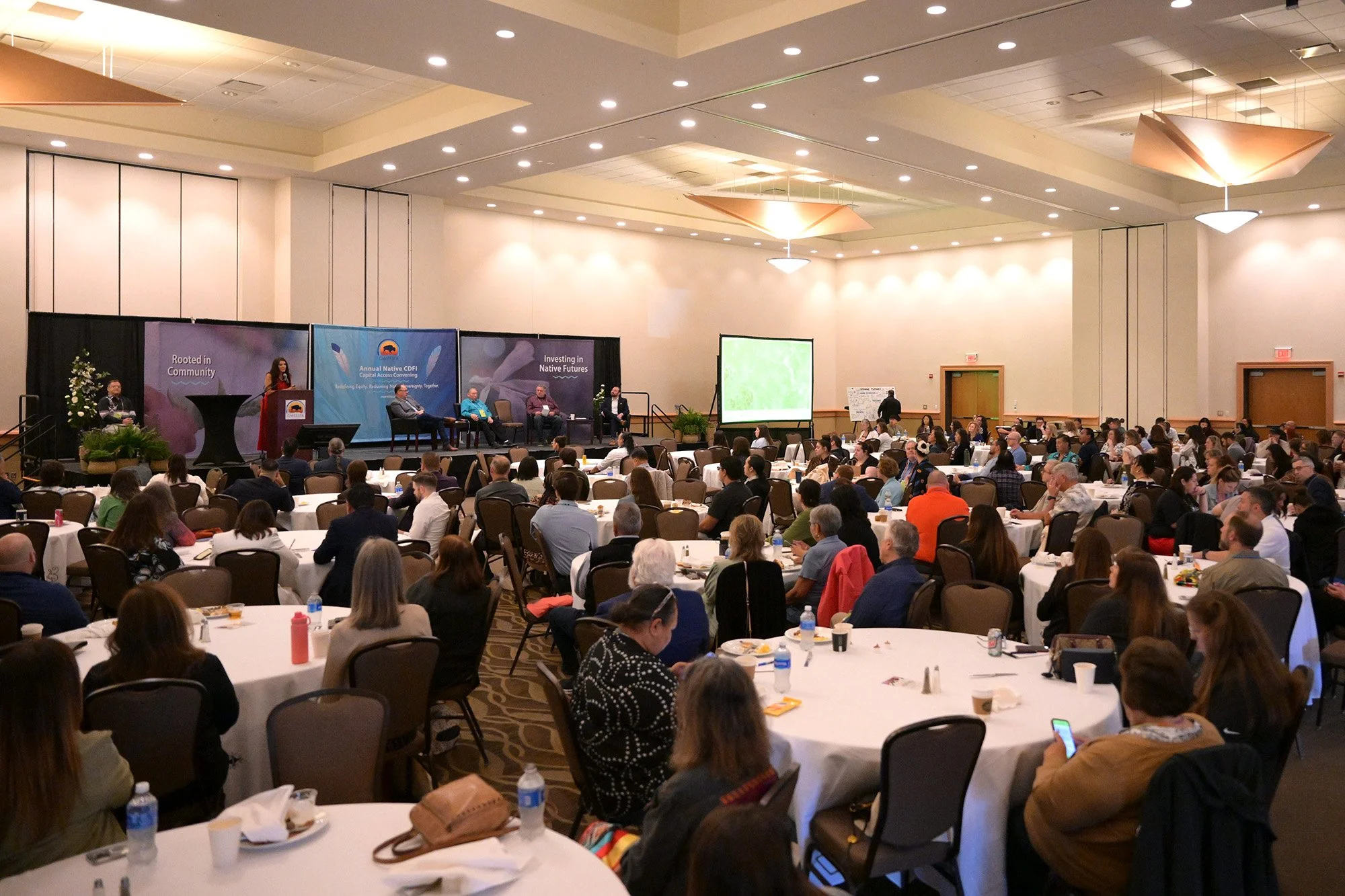
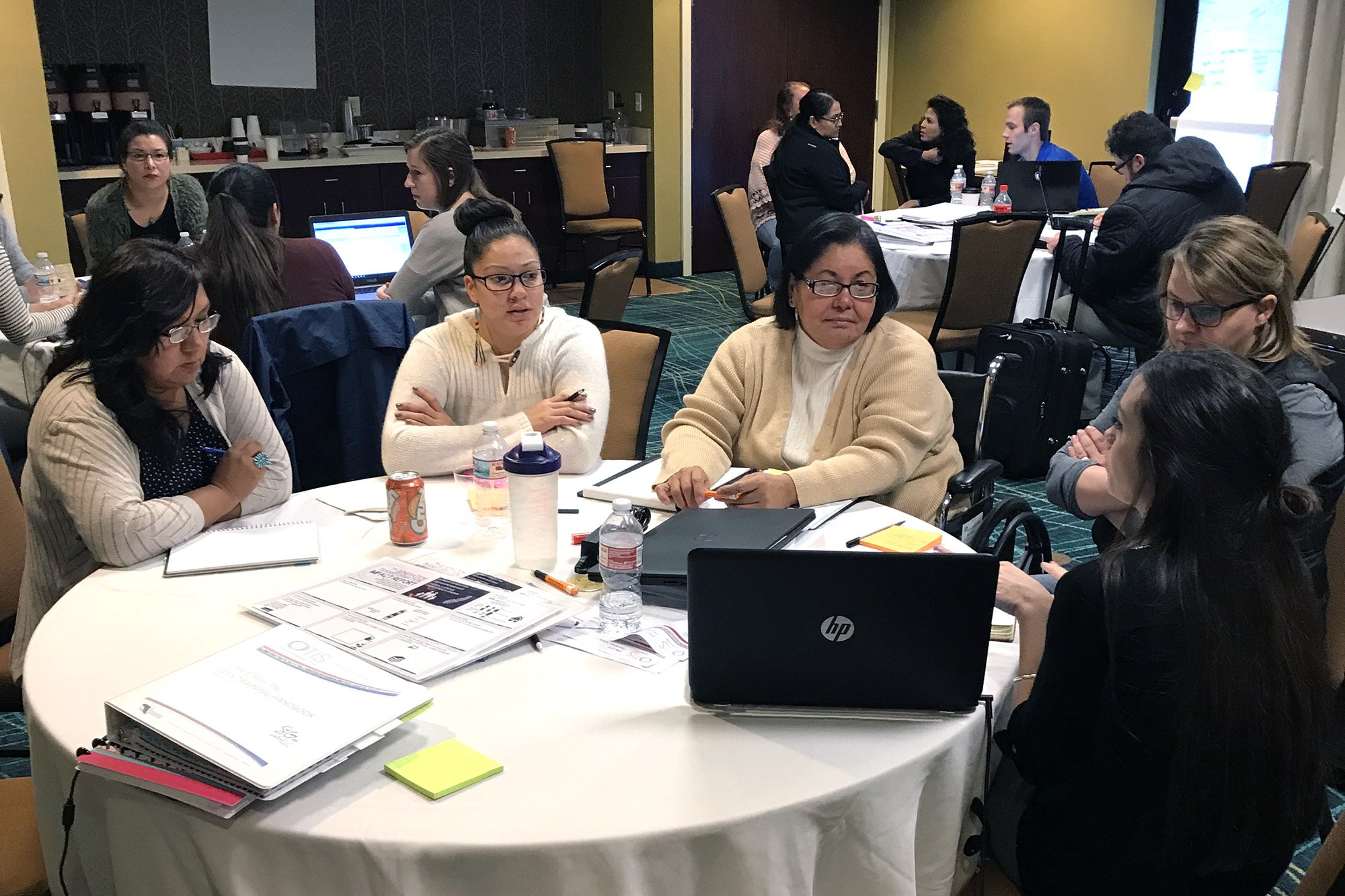
Attendees at the Capital Access Convening in Bangor, Maine, in June 2026. Photo courtesy of Oweesta.
Industry-wide sustainable technology solutions
Until now, the value of Salesforce we’ve been able to document has primarily existed at the organizational level: Akiptan’s investment produces efficiencies for Akiptan. NACDC’s investment produces efficiencies for NACDC. But shared learning creates the possibility of extending the value of those investments. The knowledge Akiptan, NACDC, Four Bands, Spruce Root, Nimiipuu Fund, Lakota Funds, and many others have developed through years has value beyond each individual CDFI, even when the CDFIs provide different types of lending, track different metrics, and report to different funders. Connecting these elements would allow acquired knowledge to travel even further.
Building more Salesforce knowledge among Native CDFI staff would make CDFIs better partners in their individual consulting relationships. Staff could identify problems earlier, articulate what they need more clearly, make smaller changes independently, and reserve consulting resources for work where specialized expertise provides the greatest value. Peer relationships add another source of knowledge without asking any individual CDFI to become completely self-sufficient.
This approach also creates a workforce development opportunity. As staff members learn to build reports, understand systems architecture, and troubleshoot processes, they may eventually earn their own Salesforce credentials. These skills are clearly in demand and valuable in both the Native CDFI space and the larger nonprofit ecosystem as more organizations adopt Salesforce. Over time, technical expertise within Native CDFIs and the broader Indigenous finance industry will expand and grow.
As we continue to build and support Salesforce systems for individual Native CDFIs, we’re excited to see what’s next for the industry. Just like our early beginnings, our services continue to evolve to meet the needs of our clients, and we remain a committed technology partner. Our goal is to develop resources, provide training, and invest in ongoing partnerships to help organizations get the most out of their data on their own terms.
*Carpenter, Surekha, Matthew Gregg, Michou Kokodoko, and James Melton. 2025. “As Demand for Native CDFIs Surges, Their Capacity Lags.” Federal Reserve Bank of Minneapolis, Center for Indian Country Development.; Dimitrova-Grajzl, Valentina, Peter Grajzl, A. Joseph Guse, and Michou Kokodoko. 2022. “Community Development Financial Institutions and Individuals’ Credit Risk in Indian Country.” Journal of Economic Issues 56(1): 184–208.; Dimitrova-Grajzl, Valentina, Peter Grajzl, A. Joseph Guse, Michou Kokodoko, and Laurel Wheeler. 2023. “When the Lender Extends a Helping Hand: Native CDFI Client Counseling and Loan Performance in Indian Country.” Journal of Economics, Race, and Policy 6(4): 258–267.; Dimitrova-Grajzl, Valentina, Peter Grajzl, Joseph Guse, Michou Kokodoko, and Laurel Wheeler. 2024. “Beyond Conventional Models: Lending by Native Community Development Financial Institutions.” Annals of Public and Cooperative Economics 95(3): 675–701.; Jorgensen, Miriam. 2016. Access to Capital and Credit in Native Communities. Tucson, AZ: Native Nations Institute.; Jorgensen, Miriam, and Randall K.Q. Akee. 2017. Access to Capital and Credit in Native Communities: A Data Review. Tucson, AZ: Native Nations Institute.; Kell, Harley. 2025. “Using Tailored Services, Native CDFIs Work to Foster Financial Resilience.” Federal Reserve Bank of Minneapolis, Center for Indian Country Development.; Kokodoko, Michou. 2024. “Native CDFIs Connect Indian Country to Credit and Capital.” Federal Reserve Bank of Minneapolis, Center for Indian Country Development.; Kokodoko, Michou, H Trostle, and Maxine Xu. 2026. “Understanding the Financial Health of Native CDFI Loan Funds: A Closer Look at the Numbers.” Federal Reserve Bank of Minneapolis, Center for Indian Country Development.; Oweesta Corporation. 2021. Native CDFI Financial and Lending Performance Report. Longmont, CO: Oweesta Corporation.; Pickering, Kathleen, and David W. Mushinski. 2001. “Cultural Aspects of Credit Institutions: Transplanting the Grameen Bank Credit Group Structure to the Pine Ridge Indian Reservation.” Journal of Economic Issues 35(2): 459–467.
Share